Electronic Data Interchange Guide: B2B Transactions, Supply Chains, and Business Integration
Electronic Data Interchange, commonly called EDI, allows businesses to exchange structured documents electronically using standardized formats.
Instead of manually entering information from emails, paper documents, or spreadsheets, organizations can transmit business data between systems in a predefined format.
EDI is widely used for transactions such as purchase orders, invoices, shipping notifications, inventory information, and payment-related documents.
It plays an important role in supply-chain automation because businesses can exchange transaction data between ERP systems, procurement platforms, warehouses, logistics systems, suppliers, and customers.
Why Electronic Data Interchange Matters
Business transactions often involve repeated exchanges of structured information between multiple organizations.
Manual data entry can create delays, duplicate work, and opportunities for transcription errors. EDI can automate the exchange of standardized information between connected systems.
Organizations may use EDI to:
Automate purchase orders
Exchange invoices electronically
Send shipping notifications
Share inventory information
Improve transaction visibility
Reduce repetitive data entry
Connect trading partners
Standardize business documents
Support supply-chain automation
Integrate ERP and procurement systems
The exact benefits depend on the transaction volume, integration architecture, business processes, and quality of the underlying data.
What Is Electronic Data Interchange?
EDI is the computer-to-computer exchange of structured business information using agreed standards and formats.
A typical transaction may follow:
Business System → EDI Translation → Secure Transmission → EDI Translation → Trading Partner System
For example, a buyer's procurement system can generate an electronic purchase order. The EDI system translates that information into an agreed format and transmits it to the supplier's system.
The supplier's system can then process the document without requiring the information to be manually re-entered.
Common EDI Documents
EDI can support many types of business transactions.
Common documents include:
Purchase orders
Purchase-order acknowledgments
Invoices
Advance shipping notices
Shipment confirmations
Inventory reports
Product catalogs
Order changes
Remittance information
Functional acknowledgments
The document types used depend on the industry, trading partners, and business requirements.
EDI Standards
EDI relies on standardized structures so that different organizations can interpret exchanged information consistently.
Common EDI standards include:
ANSI X12
ANSI X12 is widely used in North America for structured business transactions.
X12 transaction sets can support purchasing, transportation, healthcare, finance, and other business processes.
EDIFACT
UN/EDIFACT is an international standard developed for electronic data exchange across different industries and geographic markets.
It is widely used in international trade, transportation, logistics, and other commercial environments.
Industry-Specific Standards
Some industries use specialized standards or implementation guidelines.
Healthcare, automotive, retail, logistics, and other sectors may establish specific requirements for document structures, data elements, and transaction processes.
EDI Translation
EDI translation converts information between an organization's internal business systems and an external EDI format.
For example:
ERP Purchase Order → EDI Translator → X12 Transaction → Trading Partner
When an EDI document is received, the process can operate in reverse:
EDI Transaction → EDI Translator → Internal Business System
Translation technology can map fields between different data structures while applying validation rules.
EDI Integration With ERP Systems
ERP integration is one of the most important parts of an EDI environment.
An EDI platform can exchange information with systems such as:
Enterprise resource planning systems
Procurement platforms
Warehouse management systems
Transportation management systems
Accounting systems
Order management platforms
Inventory systems
Customer relationship management systems
For example, a purchase order created in an ERP system can automatically trigger an EDI transaction to a supplier.
Likewise, an incoming invoice can be transferred into an accounts-payable workflow.
EDI and Supply Chain Automation
EDI is closely connected to supply-chain automation.
A supply-chain workflow might look like:
Demand → Purchase Order → Supplier Confirmation → Shipment → Receipt → Invoice → Payment
EDI can automate the exchange of information at several stages.
This can provide businesses with better visibility into order status, shipment activity, inventory information, and financial transactions.
EDI in Procurement
Procurement teams can use EDI to automate transactions with suppliers.
Common processes include:
Purchase-order transmission
Order acknowledgments
Order changes
Shipment notifications
Invoice exchange
Supplier information
Product data
EDI can also connect procurement workflows with ERP and accounts-payable systems.
EDI in Logistics
Logistics organizations use electronic transaction standards to exchange information between shippers, carriers, brokers, warehouses, and other trading partners.
Relevant information may include:
Shipment details
Delivery information
Transportation instructions
Status updates
Freight information
Warehouse transactions
Shipping confirmations
EDI integration can help coordinate information across multiple stages of the logistics process.
EDI and Accounts Payable Automation
EDI can connect transaction data with financial workflows.
For example:
Purchase Order → Goods Receipt → EDI Invoice → Invoice Validation → Accounting Workflow
This can support automated matching between purchase orders, receipts, and invoices.
Organizations may establish additional approval or exception procedures when transaction information does not match expected business rules.
EDI and Inventory Management
Inventory information can be exchanged electronically between trading partners.
Possible data includes:
Inventory levels
Product availability
Order quantities
Shipment status
Product identifiers
Warehouse information
Improved information flow can support inventory planning and replenishment processes.
EDI Integration Methods
Organizations can implement EDI through different technical approaches.
Common methods include:
Value-Added Networks
Value-Added Networks, or VANs, provide infrastructure for exchanging EDI transactions between trading partners.
AS2
AS2 is a communication protocol commonly used for secure business-to-business data exchange over the internet.
SFTP
Secure File Transfer Protocol can be used to transfer structured files between organizations and systems.
APIs
APIs provide another method for exchanging data between modern business applications.
Some organizations use both EDI and APIs depending on the trading partner and transaction requirements.
EDI vs. API Integration
EDI and API integration can serve different purposes.
| Feature | EDI | API |
|---|---|---|
| Primary use | Structured B2B transactions | Application-to-application data exchange |
| Data exchange | Standardized business documents | Requests and responses |
| Common environment | Supply chains and trading partners | Modern software platforms |
| Processing | Often document-oriented | Often near real-time |
| Standards | X12, EDIFACT, industry standards | REST, SOAP, GraphQL and others |
| Integration model | Trading-partner focused | Application focused |
Many organizations use both technologies as part of a broader integration strategy.
EDI Security
EDI transactions can contain commercially sensitive information, so security controls are important.
Organizations may use:
Encryption
Authentication
Digital certificates
Secure transmission protocols
Access controls
Audit logging
Data validation
Monitoring
Backup procedures
Incident-response processes
Security requirements depend on the information exchanged, industry, technology, and applicable regulations.
EDI Data Quality and Validation
Incorrect transaction data can create operational problems even when the technical connection is functioning properly.
EDI validation can check:
Required fields
Data formats
Transaction identifiers
Product codes
Quantities
Dates
Partner identifiers
Duplicate transactions
Invalid values
Validation rules can help identify errors before information reaches downstream business systems.
EDI Acknowledgments and Monitoring
EDI systems commonly use acknowledgments to confirm that transactions have been received or processed.
Organizations may monitor:
Transaction status
Transmission failures
Rejected documents
Processing delays
Duplicate transactions
Partner connectivity
Validation errors
Missing acknowledgments
Monitoring can help teams identify problems before they disrupt downstream business processes.
EDI Implementation
Organizations implementing EDI can follow a structured process.
1. Identify trading partners
Determine which suppliers, customers, carriers, or other organizations require electronic transaction exchange.
2. Identify transaction types
Determine which business documents need to be exchanged.
3. Select standards
Establish the appropriate transaction standards and implementation guidelines.
4. Map business data
Connect internal system fields to the required EDI fields.
5. Configure connectivity
Establish the appropriate communication method, such as AS2, SFTP, VAN, or another supported integration method.
6. Test transactions
Test normal transactions, rejected transactions, corrections, duplicates, and exception scenarios.
7. Monitor production
Track transaction status, acknowledgments, errors, and system performance after implementation.
EDI Planning Checklist
Organizations evaluating EDI can consider:
Identify trading partners
Determine required transaction types
Select EDI standards
Review ERP integration requirements
Map required data fields
Select connectivity methods
Establish security controls
Define validation rules
Configure acknowledgments
Establish transaction monitoring
Define exception procedures
Test partner integrations
Establish data-retention policies
Review compliance requirements
Monitor integration performance
Document trading-partner requirements
Recent Developments in EDI
EDI continues to evolve alongside cloud computing, API integration, automation, and supply-chain technology.
Important developments include:
Cloud-based EDI platforms
EDI-as-a-service models
API and EDI integration
Automated document mapping
AI-assisted data validation
Real-time transaction monitoring
Supply-chain visibility platforms
Automated exception management
Greater ERP integration
Expanded B2B integration platforms
Many organizations are combining traditional EDI standards with APIs and modern integration technologies rather than replacing one approach entirely.
Laws, Policies, and Compliance Considerations
EDI transactions can be affected by requirements concerning:
Electronic records
Data protection
Financial documentation
Tax records
Industry-specific requirements
Payment information
Contractual obligations
Record retention
Information security
Requirements vary by jurisdiction and industry.
Organizations should also consider contractual requirements established between trading partners, particularly regarding transaction formats, acknowledgment procedures, data security, retention, and dispute handling.
Tools and Resources
Organizations researching EDI can review:
EDI integration platforms
ERP documentation
ANSI X12 resources
UN/EDIFACT resources
API documentation
Supply-chain management platforms
Procurement systems
Warehouse management systems
Transportation management systems
Data-integration and monitoring tools
FAQs
1. What is Electronic Data Interchange?
Electronic Data Interchange is the electronic exchange of standardized business documents between organizations and their computer systems.
2. What is EDI used for?
EDI can be used for purchase orders, invoices, shipping notifications, inventory information, order acknowledgments, and other structured B2B transactions.
3. What are common EDI standards?
ANSI X12 and UN/EDIFACT are widely used standards. Some industries also use specialized transaction standards and implementation guidelines.
4. Can EDI integrate with ERP systems?
Yes. EDI platforms can connect with ERP, procurement, accounting, warehouse, transportation, inventory, and other enterprise systems.
5. Is EDI the same as an API?
No. EDI is generally focused on standardized business documents exchanged between trading partners, while APIs are commonly used for application-to-application data exchange. Organizations may use both.
Conclusion
Electronic Data Interchange provides a structured method for exchanging business information between organizations and their systems.
By connecting EDI with ERP, procurement, inventory, warehouse, logistics, and financial platforms, organizations can automate important B2B transaction workflows and improve information consistency.
Organizations evaluating EDI should consider transaction standards, trading-partner requirements, system integration, security, data validation, monitoring, exception handling, and applicable compliance obligations.

Related Post...

Project Cost Management Guide: Budget Tracking, Forecasting, and Business Controls
Updated: September 23, 2026
Read More
Professional Services Automation Guide: Projects, Time Tracking, and Business Operations
Updated: September 23, 2026
Read More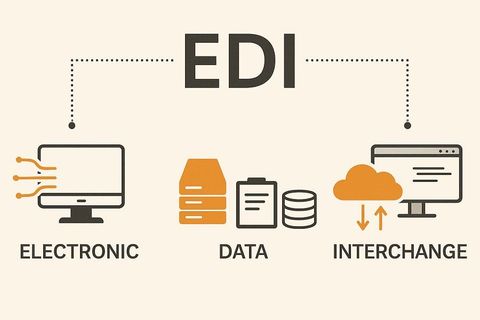
Electronic Data Interchange Guide: B2B Transactions, Supply Chains, and Business Integration
Updated: September 23, 2026
Read More