Electric Vehicle Charging Infrastructure Guide: Charging Networks, Site Planning, and Operations
Electric vehicle (EV) adoption is increasing the need for dependable charging infrastructure across homes, workplaces, commercial properties, fleet facilities, parking areas, and highway corridors. A charging project involves more than installing charging equipment. It can require electrical planning, site assessment, utility coordination, network connectivity, payment systems, accessibility considerations, data management, and ongoing equipment monitoring.
The U.S. Department of Energy's Alternative Fuels Data Center (AFDC) tracks public and private EV charging infrastructure and provides tools for station planning, network information, and infrastructure analysis.
A well-planned charging site should match charger power with expected vehicle demand, available electrical capacity, parking patterns, dwell time, geographic location, and future expansion requirements.
Understanding EV Charging Infrastructure
EV charging infrastructure generally includes several interconnected components:
Charging equipment: Level 1, Level 2, and DC fast charging equipment.
Electrical infrastructure: Panels, transformers, switchgear, conduit, wiring, and related equipment.
Charging ports: Individual connection points where vehicles receive electricity.
Network software: Platforms used to monitor equipment, manage access, process transactions, and collect utilization information.
Communications: Cellular, Wi-Fi, Ethernet, or other connectivity used to communicate with network platforms.
Energy management: Systems that can coordinate charging loads and help manage electrical demand.
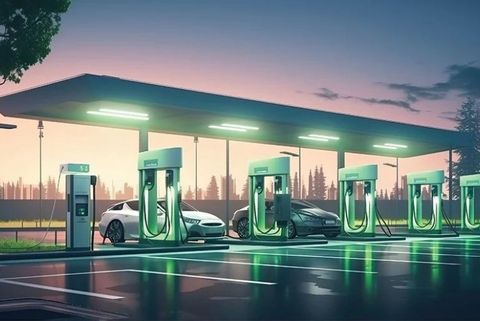
Physical infrastructure: Parking spaces, lighting, signage, protective equipment, and accessible routes.
The AFDC notes that charging speed depends on factors including battery state of charge, battery capacity, vehicle charging capability, charger power, and electrical infrastructure.
Types of EV Charging
| Charging Type | Typical Use | Key Planning Consideration |
|---|---|---|
| Level 1 | Homes and long-dwell locations | Lower power and longer charging periods |
| Level 2 | Homes, workplaces, apartments, retail, public parking | Flexible option for longer dwell periods |
| DC Fast Charging | Highway corridors, fleet hubs, high-turnover locations | Higher electrical demand and faster charging |
| High-power DC charging | Major travel corridors and specialized fleets | Utility capacity, equipment configuration, and load management |
The AFDC reports that Level 2 equipment is widely used for public and workplace charging, while DC fast charging is particularly relevant for faster charging along travel corridors. DC equipment can reach power levels up to 500 kW, although actual charging performance depends on the vehicle and battery conditions.
Connector standards are also important. The U.S. charging ecosystem includes J1772, CCS, CHAdeMO, and J3400/NACS-related equipment. SAE standardization of J3400 has also influenced charger and vehicle compatibility planning.
Charging Networks and Network Management
A charging network connects charging stations through software that allows operators and drivers to interact with the infrastructure.
According to the AFDC, network platforms can support functions such as:
Station monitoring
Charger status reporting
Driver access
Session initiation
Payment processing
Utilization reporting
Equipment health monitoring
Data collection
Remote management
The AFDC Station Locator currently tracks numerous charging networks and receives information through APIs, periodic data files, and other reporting methods.
For larger deployments, network interoperability can be an important planning consideration. Open communication protocols and standardized data exchange can make it easier to integrate equipment, software, and reporting systems.
EV Charging Site Planning
Site planning should begin with the expected use case rather than the charger itself.
1. Define the Charging Objective
First determine who will use the chargers and how long vehicles are expected to remain parked.
Examples include:
Employee workplace charging
Apartment or multifamily charging
Public destination charging
Highway corridor charging
Commercial fleet charging
Delivery fleet charging
Municipal fleet charging
Retail or hospitality charging
A workplace with vehicles parked for eight hours may have different requirements from a highway location where drivers expect a much shorter dwell period.
2. Evaluate the Location
Important site factors include:
Traffic patterns
Parking availability
Vehicle access
Existing electrical infrastructure
Utility connection location
Property ownership
Drainage and surface conditions
Lighting
Accessibility
Security
Future expansion potential
The DOE's EVI-X Toolbox can help planners estimate charging infrastructure requirements and examine potential effects on electricity demand.
3. Assess Electrical Capacity
Electrical capacity can become one of the most important project constraints.
A site assessment may examine:
Existing service capacity
Transformer capacity
Main electrical panels
Available circuit capacity
Voltage requirements
Distribution equipment
Utility interconnection requirements
Peak electrical demand
Future charger expansion
Several high-power chargers operating simultaneously can create substantial electrical demand. Load management can therefore become an important part of larger installations.
4. Plan for Expansion
A site that works for a small number of EVs today may require additional charging ports later.
Planning for expansion can include:
Reserved electrical capacity
Conduit pathways
Additional parking spaces
Equipment locations
Communications infrastructure
Larger electrical equipment where appropriate
Designing expansion pathways early can reduce disruption during future upgrades.
Charging Infrastructure Operations
After equipment becomes operational, ongoing management is important for reliability and utilization.
Operators may monitor:
Charger availability
Charging sessions
Energy consumption
Equipment faults
Network connectivity
Payment activity
Utilization levels
Maintenance events
User access
Peak charging periods
Networked chargers can provide operational data that helps identify underused locations, recurring equipment problems, and periods of high demand.
The AFDC distinguishes between charging network providers and station operators, with network platforms supporting communication between stations and software systems.
Energy Management and Load Planning
Charging infrastructure can interact significantly with a property's electrical load.
Energy-management approaches can help coordinate charging activity based on:
Time of day
Available electrical capacity
Vehicle departure requirements
Electricity demand
Charger priority
Fleet schedules
Battery state
Site energy-management objectives
Managed charging can be particularly relevant for fleet depots and commercial properties where several vehicles may charge simultaneously.
For larger facilities, charging infrastructure may also be evaluated alongside solar generation, stationary battery storage, building loads, and other electrical equipment.
Recent U.S. Updates
Federal EV infrastructure programs continue to shape charging deployment. The National Electric Vehicle Infrastructure (NEVI) Formula Program was established under the Infrastructure Investment and Jobs Act to help states deploy EV charging infrastructure and develop an interconnected network. States are required to submit EV infrastructure deployment plans describing how allocated NEVI funds will be used.
The federal Alternative Fuel Vehicle Refueling Property Credit also underwent a major change in 2025. Current IRS guidance states that the Section 30C credit was terminated for qualifying property placed in operation after June 30, 2026, following changes made by the One Big Beautiful Bill Act.
This means that older information describing the credit as continuing through 2032 can now be outdated for property placed in operation after June 30, 2026. Businesses and organizations should review current IRS guidance before relying on historical charging-infrastructure tax information.
Laws, Standards, and Compliance Considerations
EV charging projects can involve several layers of requirements.
Depending on location and project type, planners may need to consider:
National Electrical Code requirements
Local electrical codes
Building and zoning requirements
Utility interconnection rules
Accessibility requirements
Fire and electrical safety requirements
State EV infrastructure regulations
Federal program requirements
Equipment certification requirements
Parking and signage regulations
Data and payment requirements
Requirements can vary considerably between jurisdictions. A project receiving public funding may also have additional program-specific requirements.
The AFDC provides state and local planning resources because charging deployment strategies need to reflect each jurisdiction's infrastructure, transportation patterns, policies, and planning objectives.
Tools and Resources
Several U.S. resources can support EV charging infrastructure research and planning:
| Resource | Primary Use |
|---|---|
| AFDC Station Locator | Find EV charging stations and examine station information |
| AFDC Charging Networks | Research network operators and charging-network data |
| EVI-X Toolbox | Estimate infrastructure requirements and electricity-demand effects |
| Joint Office Resources | Research federal EV infrastructure programs and state planning |
| IRS Form 8911 Guidance | Review applicable charging-infrastructure tax-credit rules |
| Utility Planning Resources | Examine electrical capacity and interconnection requirements |
The AFDC Station Locator also provides mapping, route-planning, station filtering, and infrastructure trend information.
FAQs
1. What is EV charging infrastructure?
EV charging infrastructure includes charging equipment, electrical distribution equipment, communications systems, network software, parking spaces, and related physical infrastructure used to provide electricity to electric vehicles.
2. What is the difference between Level 2 and DC fast charging?
Level 2 generally provides AC charging at lower power and is well suited to locations where vehicles remain parked for longer periods. DC fast charging provides higher-power direct-current charging and is commonly used where faster charging is important.
3. How should an EV charging site be planned?
Planning should consider expected vehicle demand, parking patterns, charger type, electrical capacity, utility requirements, site access, accessibility, communications, safety, network management, and potential future expansion.
4. What is an EV charging network?
An EV charging network connects charging stations through software that can support station monitoring, driver access, charging-session management, payment functions, and operational data.
5. Are federal EV charging tax credits still available in 2026?
The Section 30C Alternative Fuel Vehicle Refueling Property Credit was terminated for qualifying property placed in operation after June 30, 2026. Current IRS guidance should be reviewed before making decisions based on older tax-credit information.
Conclusion
EV charging infrastructure combines electrical systems, charging equipment, software, communications, site planning, and ongoing operational management. The appropriate design depends on whether a location supports individual drivers, workplaces, fleets, commercial properties, or long-distance travel.
Successful planning begins with the expected charging use case and then evaluates site conditions, electrical capacity, equipment selection, network requirements, safety, accessibility, and future expansion.
Because U.S. charging programs, tax rules, technical standards, and local requirements can change, project planners should verify current federal, state, utility, and local requirements before proceeding.

Related Post...
Toyota OEM Suspension Guide: Genuine Chassis Components, Vehicle Systems, and Maintenance
Updated: August 31, 2026
Read More
Mobility Scooter Guide: Accessibility Technology, Features, and Selection Tips
Updated: September 07, 2026
Read More
Honda OEM Electrical Guide: Factory Electronics, Vehicle Systems, and Component Maintenance
Updated: August 31, 2026
Read More