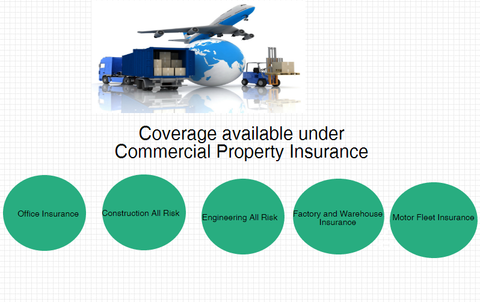
Commercial Property Insurance Claims Guide: Damage Assessment, Documentation, and Recovery
Commercial property insurance can help businesses manage certain financial losses associated with covered damage to buildings, equipment, inventory, furnishings, and other insured property. Coverage depends on the specific policy, covered causes of loss, exclusions, limits, deductibles, endorsements, and applicable conditions.
A commercial property insurance claim generally requires more than reporting that damage occurred. The policyholder may need to document the condition of the property, establish the nature and extent of the loss, preserve supporting financial records, and demonstrate that the claimed damage falls within the applicable coverage.
Common commercial property claims can involve events such as fire, wind, hail, certain types of water damage, theft, vandalism, or other covered causes of loss. However, coverage varies by policy.
Why Commercial Property Claim Documentation Matters
A well-organized claim file can help establish what happened, what property was affected, and what financial impact resulted.
Important documentation may include:
Photographs and videos
Property inventories
Building records
Equipment lists
Purchase invoices
Receipts
Repair estimates
Contractor reports
Maintenance records
Inventory records
Accounting records
Tax documents
Lease agreements
Property valuations
Security records
Correspondence with the insurer
Documentation should be collected as soon as reasonably possible while taking appropriate steps to protect people and prevent additional damage.
Understanding Commercial Property Insurance Coverage
Commercial property policies can contain several types of coverage.
| Coverage Area | General Purpose |
|---|---|
| Building coverage | May apply to qualifying damage to insured structures |
| Business personal property | May cover qualifying business-owned property |
| Inventory | May address covered damage to qualifying stock |
| Equipment | May cover eligible business equipment |
| Tenant improvements | May apply to qualifying improvements made by a tenant |
| Business income | May address certain income losses from covered interruptions |
| Extra expense | May address certain additional expenses incurred to continue operations |
| Equipment breakdown | May provide separate coverage for qualifying mechanical or electrical breakdowns |
| Ordinance or law | May address certain additional rebuilding requirements |
| Debris removal | May provide coverage for qualifying debris-removal expenses |
| Valuable papers | May address certain business records and documents |
| Outdoor property | May provide limited coverage for qualifying outdoor property |
The actual policy wording controls. Some coverages may be included, while others require specific endorsements or separate policies.
Reviewing the Insurance Policy
Before assessing a claim, the policy should be reviewed carefully.
Key areas include:
Covered causes of loss
Exclusions
Policy limits
Deductibles
Coinsurance provisions
Valuation provisions
Replacement-cost provisions
Actual-cash-value provisions
Endorsements
Coverage extensions
Conditions
Claim notification requirements
Proof-of-loss requirements
Duties after loss
A policy can also contain different limits for specific categories of property. Reviewing the declarations page together with the complete policy wording can provide a clearer understanding of the applicable coverage.
Damage Assessment After a Property Loss
The initial damage assessment should focus on safety and preservation of evidence.
After an incident, a business may need to:
Address immediate safety concerns.
Contact emergency responders when appropriate.
Notify the insurer promptly.
Photograph and record affected areas.
Prevent additional damage when reasonably possible.
Separate damaged and undamaged property when practical.
Preserve relevant records.
Arrange qualified inspections.
Obtain repair or replacement estimates.
Maintain a detailed claim file.
Businesses should avoid unnecessary disposal of damaged property before it has been appropriately documented or the insurer has had an opportunity to inspect it, unless safety or other circumstances require immediate removal.
Documenting Building Damage
Building-related documentation may include:
Roof damage
Walls and ceilings
Flooring
Doors and windows
Electrical systems
Plumbing systems
HVAC equipment
Structural components
Exterior features
Fixtures
Permanent improvements
Photographs should ideally show both the overall affected area and detailed views of individual damage.
Repair estimates should identify the affected components and describe the proposed work. For significant losses, engineering, architectural, environmental, or other professional assessments may be appropriate depending on the circumstances.
Documenting Equipment and Business Property
Businesses should maintain an inventory of affected property.
Useful information can include:
Item description
Manufacturer
Model
Serial number
Purchase date
Original purchase documentation
Current condition
Estimated replacement information
Repair estimate
Location within the premises
For specialized equipment, technical inspection reports can help determine whether repair or replacement is appropriate.
Inventory and Stock Losses
Inventory claims can require detailed records because quantities and values may change over time.
Potential supporting information includes:
Inventory management records
Purchase invoices
Sales records
Stock counts
Warehouse records
Shipping documents
Supplier invoices
Photographs
Disposal records
Accounting records
The valuation method applicable to the claim may depend on the policy and the nature of the property.
Actual Cash Value vs. Replacement Cost
Property policies may use different valuation approaches.
Actual cash value (ACV) generally considers depreciation or other factors affecting the property's value.
Replacement cost generally focuses on the amount needed to replace qualifying property with comparable property, subject to the policy's conditions and limits.
The distinction can significantly affect a claim calculation. The applicable policy language should be reviewed before estimating the final claim amount.
Business Income and Property Claims
A physical property loss can sometimes create a second financial impact by interrupting normal business operations.
Depending on the policy, a business may have separate coverage for:
Business income
Lost income
Continuing expenses
Extra expenses
Certain dependent-property interruptions
Certain civil-authority restrictions
These provisions are different from direct physical property damage coverage and may have separate requirements, limits, waiting periods, and coverage periods.
Businesses should therefore track property damage and business interruption losses separately.
Calculating the Property Loss
A commercial property claim can involve multiple categories of financial information.
A claim worksheet may include:
| Loss Category | Documentation |
|---|---|
| Building damage | Contractor estimates, inspection reports |
| Equipment | Inventory, invoices, repair assessments |
| Inventory | Stock records, invoices, counts |
| Furniture | Asset records and purchase documentation |
| Fixtures | Property records and estimates |
| Debris removal | Invoices and disposal documentation |
| Temporary repairs | Receipts and contractor records |
| Business income | Financial statements and revenue records |
| Extra expenses | Receipts and expense schedules |
The final covered amount depends on the policy's provisions rather than simply adding every expense incurred after an incident.
Working With the Claims Adjuster
An insurance adjuster may investigate the loss, inspect damaged property, review documentation, and evaluate the claim under the applicable policy.
A business can maintain an organized communication record containing:
Adjuster's name
Claim number
Date of loss
Inspection dates
Documents submitted
Questions received
Responses provided
Estimates
Claim payments
Coverage correspondence
Keeping copies of submitted documents can help maintain a complete record of the claim.
Common Commercial Property Claim Challenges
Claims can become complicated when there are questions involving:
Cause of loss
Policy exclusions
Coverage limits
Property valuation
Depreciation
Coinsurance
Underinsurance
Multiple policies
Business interruption
Pre-existing damage
Repair vs. replacement
Ordinance or law requirements
Documentation gaps
A disputed claim may require review by appropriately qualified insurance, accounting, engineering, or legal professionals depending on the issue.
Coinsurance and Underinsurance Considerations
Some commercial property policies contain coinsurance provisions that can affect claim payments when the insured value is below a specified percentage of the property's required value.
Businesses should periodically review property values and coverage limits as buildings, equipment, inventory, construction costs, and business operations change.
A policy limit that was appropriate several years ago may not necessarily reflect current property values or replacement requirements.
Recovery Planning After Property Damage
Insurance recovery is only one component of business recovery.
A broader recovery plan may include:
Temporary operating locations
Alternative suppliers
Equipment replacement planning
Employee communication
Customer communication
Data recovery
Inventory replacement
Financial planning
Business continuity procedures
Emergency funding arrangements
Updated insurance reviews
Businesses with critical operations can benefit from maintaining a business continuity and disaster recovery plan before a major loss occurs.
Recent U.S. Insurance Considerations
Commercial property insurance requirements and claim procedures vary by state and policy. State insurance departments regulate many aspects of insurance within their jurisdictions, while policy forms and coverage conditions can differ among insurers.
The National Association of Insurance Commissioners provides consumer and business insurance information, while state insurance departments can provide jurisdiction-specific regulatory information.
Businesses should review their policies periodically rather than waiting until a loss occurs to determine what coverage and documentation requirements apply.
Tools and Resources
Useful resources for commercial property claim preparation include:
Current commercial property policy
Declarations page
Policy endorsements
Property inventory
Asset register
Accounting records
Tax records
Purchase invoices
Maintenance records
Contractor estimates
Engineering reports
Business continuity plan
Disaster recovery plan
State insurance department
National Association of Insurance Commissioners
Insurance Information Institute
For significant or complex losses, appropriately qualified insurance, accounting, engineering, restoration, and legal professionals may assist with specific aspects of the recovery process.
Commercial Property Insurance Claim Checklist
Before submitting or reviewing a claim, consider whether you have:
☐ Current insurance policy
☐ Declarations page
☐ Applicable endorsements
☐ Claim number
☐ Date and description of loss
☐ Photographs and videos
☐ Building damage assessment
☐ Equipment inventory
☐ Inventory and stock records
☐ Purchase invoices
☐ Repair estimates
☐ Replacement estimates
☐ Financial records
☐ Business income documentation
☐ Extra expense records
☐ Temporary repair receipts
☐ Contractor reports
☐ Inspection reports
☐ Claim correspondence
☐ Proof-of-loss documentation where required
FAQs
What is a commercial property insurance claim?
A commercial property insurance claim is a request for coverage under a business property policy following qualifying damage or loss involving insured commercial property.
What documents are useful for a commercial property claim?
Useful documentation can include photographs, videos, property inventories, invoices, financial records, repair estimates, contractor reports, maintenance records, and other evidence supporting the nature and value of the loss.
How is commercial property damage valued?
Depending on the policy, valuation may involve actual cash value, replacement cost, stated amounts, or another method specified in the policy. The applicable valuation provisions should be reviewed before calculating the claim.
Can business interruption losses be included in a property claim?
Some commercial policies provide business income or business interruption coverage in addition to direct property coverage. The applicable policy provisions determine whether an interruption qualifies and how the loss is calculated.
What should a business do immediately after property damage?
The business should prioritize safety, notify the appropriate emergency and insurance contacts, take reasonable steps to prevent additional damage, document the affected property, preserve evidence, and maintain detailed records of expenses and communications.
Conclusion
Commercial property insurance claims require careful coordination between coverage review, damage assessment, financial documentation, and recovery planning. A detailed record of the property, financial impact, repairs, and expenses can provide important support when evaluating a claim.
Businesses can also reduce uncertainty by periodically reviewing policy limits, property values, inventories, endorsements, and business continuity plans before a loss occurs.

Related Post...

Mortgage Protection Guide: Coverage Types, Eligibility, and Financial Planning
Updated: September 08, 2026
Read More
Marine Insurance Guide: Vessel Coverage, Shipping Risks, and Policy Planning
Updated: September 14, 2026
Read More
Cargo Insurance Guide: Freight Protection, Shipping Risks, and Claims Information
Updated: September 14, 2026
Read More