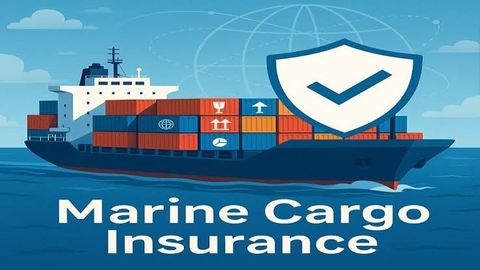
Cargo Insurance Guide: Freight Protection, Shipping Risks, and Claims Information
Cargo moves through complex transportation networks involving manufacturers, suppliers, warehouses, freight forwarders, brokers, carriers, ports, airports, rail terminals, and final delivery locations.
During transportation, goods can be exposed to risks such as theft, collision, fire, water damage, mishandling, temperature fluctuations, loading incidents, and delays.
Cargo insurance is designed to address certain covered losses involving goods while they are being transported. The exact protection depends on the policy, transportation method, shipment characteristics, exclusions, limits, and applicable legal requirements.
Cargo insurance should also be distinguished from carrier liability. A carrier may have legal responsibility for certain losses without that responsibility being equivalent to a shipper's own cargo insurance coverage.
Why Cargo Insurance Matters
Freight can represent a significant portion of a company's inventory and working capital.
Cargo protection may be relevant for:
Manufacturers
Importers and exporters
Wholesalers
Retailers
E-commerce businesses
Freight forwarders
Shippers
Logistics companies
Distributors
Construction companies
Pharmaceutical companies
Food and beverage businesses
Automotive companies
Electronics manufacturers
A shipment can be exposed to multiple risks between origin and destination. Understanding those risks helps businesses evaluate transportation contracts, insurance requirements, carrier liability, documentation, and claims procedures.
What Is Cargo Insurance?
Cargo insurance is coverage intended to protect the financial interest associated with goods while they are being transported, subject to the policy terms.
Depending on the policy, coverage may apply to transportation by:
Truck
Rail
Ocean vessel
Air freight
Parcel carrier
Multimodal transportation
Inland transportation
Warehousing connected with transportation
The policy determines which causes of loss are covered and which are excluded.
Coverage may be arranged on an individual shipment basis or under broader transportation insurance arrangements, depending on the business's shipping profile and insurance structure.
Major Types of Cargo Insurance
Marine Cargo Insurance
Marine cargo insurance is commonly associated with goods transported by ocean but can also form part of broader transportation coverage.
Potential risks can include:
Water damage
Vessel-related incidents
Container damage
Fire
Theft
General average exposure
Loading and unloading risks
Certain transit-related losses
International shipments may involve contracts, bills of lading, trade terms, and international conventions or national laws that affect carrier responsibility.
Air Cargo Insurance
Air cargo insurance applies to goods transported by aircraft when the policy provides the applicable coverage.
Air freight can involve high-value products, time-sensitive shipments, electronics, pharmaceuticals, medical products, and other specialized cargo.
Businesses should examine declared values, transportation conditions, packaging requirements, exclusions, and documentation requirements.
Inland Cargo Insurance
Inland cargo coverage can apply to goods moving within a country or between transportation points.
Typical risks may involve:
Truck accidents
Theft
Fire
Loading incidents
Unloading incidents
Collision
Weather-related damage
Storage-related exposures where specifically covered
The policy wording determines the actual scope of protection.
Multimodal Cargo Insurance
International freight may move through several transportation methods during one journey.
For example:
Factory → Truck → Port → Ocean Vessel → Port → Rail → Truck → Warehouse
Multimodal cargo insurance can be structured to address transportation across multiple stages, subject to the policy's territorial, coverage, and transit provisions.
Common Cargo Risks
Cargo can encounter different risks depending on the product and transportation method.
| Risk | Example |
|---|---|
| Theft | Goods disappear during transportation or storage |
| Collision | Vehicle accident damages the shipment |
| Water damage | Moisture damages cargo or packaging |
| Fire | Fire destroys or damages goods |
| Mishandling | Improper loading or unloading causes damage |
| Temperature excursion | Temperature-sensitive goods leave required ranges |
| Breakage | Fragile goods are damaged during handling |
| Container damage | Container failure exposes cargo |
| Contamination | Products become contaminated during transit |
| Natural hazards | Storms or other events affect transportation |
| General average | Certain maritime losses may be allocated among voyage interests |
| Delay | Transportation disruption affects delivery timing |
Not every event is necessarily covered by every cargo insurance policy.
All-Risk and Named-Peril Coverage
Cargo insurance structures can differ substantially.
Named-peril coverage generally identifies specific causes of loss that are covered.
All-risk or broad-form cargo coverage generally provides wider protection subject to policy exclusions, conditions, deductibles, and other limitations.
The term "all risk" does not mean that every possible loss is automatically covered.
Businesses should review:
Covered causes of loss
Exclusions
Deductibles
Policy limits
Valuation provisions
Territorial limits
Transit definitions
Packaging requirements
Reporting requirements
Claims procedures
Cargo Valuation
Determining the appropriate insured value is an important part of transportation risk planning.
Depending on the policy and transaction, valuation may consider:
Commercial invoice value
Purchase price
Replacement value
Declared value
Freight charges
Customs duties
Expected profit
Additional transportation-related amounts
The appropriate valuation method depends on the policy terms and the underlying transaction.
For international trade, businesses should also examine how the applicable Incoterms® arrangement allocates transportation, delivery, risk, and insurance responsibilities between the parties.
Carrier Liability vs. Cargo Insurance
One of the most important distinctions in freight protection is the difference between carrier liability and cargo insurance.
Carrier liability is generally based on transportation law, contracts, bills of lading, tariffs, and other applicable rules.
Cargo insurance is an insurance arrangement designed to protect the insured's financial interest according to the policy.
These concepts are not interchangeable.
Under the U.S. Carmack Amendment, 49 U.S.C. § 14706 establishes rules concerning certain motor-carrier and freight-forwarder liability for loss or injury to property transported under receipts or bills of lading. The statute also establishes minimum periods for filing claims and bringing certain civil actions.
This means a shipper should not automatically assume that a carrier's liability equals the full value of the shipment.
U.S. Motor Carrier Insurance Requirements
Federal transportation regulations distinguish between public liability financial responsibility and cargo insurance requirements.
FMCSA currently states that household goods carriers and freight forwarders of household goods are required to maintain cargo insurance. Most other for-hire property carriers are not subject to a federal cargo-insurance filing requirement under the same framework.
This distinction is important because:
Federal cargo-insurance requirements ≠ recommended cargo protection for every shipment.
A business may still require contractual cargo coverage or purchase its own transportation insurance even when federal law does not mandate it.
FMCSA's current insurance filing information also shows that financial-responsibility requirements vary according to entity type, operating authority, cargo, and vehicle characteristics.
Freight Forwarders and Brokers
Freight forwarders and brokers have different regulatory roles.
FMCSA's current framework includes financial-responsibility requirements for brokers and freight forwarders. Beginning January 16, 2026, new requirements concerning broker and freight-forwarder financial responsibility became applicable under the relevant FMCSA rule framework.
Businesses working with transportation intermediaries should therefore distinguish among:
Motor carriers
Freight forwarders
Property brokers
Customs brokers
Third-party logistics providers
Warehouse operators
Their legal responsibilities and insurance arrangements can differ.
Ocean Cargo and COGSA
International ocean transportation can involve the Carriage of Goods by Sea Act (COGSA).
COGSA establishes certain responsibilities and liabilities associated with the carriage of goods by sea and addresses issues involving bills of lading, carrier duties, and limitations of liability.
The statute generally covers the period from loading until discharge and contains specific rules concerning carrier responsibilities and defenses.
International shipments can also involve contractual terms and other legal frameworks, so businesses should examine the governing transportation documents carefully.
Cargo Claims: What Is a Claim?
A cargo claim is a formal demand for compensation or recovery relating to cargo that was allegedly lost, damaged, delayed, or otherwise affected during transportation.
A claim may involve:
Damaged freight
Missing freight
Shortage
Concealed damage
Water damage
Theft
Temperature-related loss
Contamination
Improper handling
Transportation incidents
The exact procedure depends on the carrier, policy, contract, transportation mode, and applicable law.
Cargo Claims Documentation
Good documentation can significantly improve the ability to investigate a freight claim.
Important records can include:
Commercial invoice
Bill of lading
Packing list
Proof of delivery
Delivery receipt
Photographs
Inspection reports
Freight invoices
Purchase records
Weight records
Temperature records
Tracking information
Carrier correspondence
Warehouse records
Incident reports
Customs documentation
Insurance policy information
Businesses should preserve original records and follow applicable notification deadlines.
Damaged Freight Claims
When freight arrives visibly damaged, documentation should begin at delivery.
Useful steps may include:
Inspect the shipment before accepting delivery when practical.
Photograph visible damage.
Record the condition on the delivery documentation.
Preserve packaging and damaged goods.
Notify the relevant carrier or transportation party.
Review the applicable policy or contract.
Obtain supporting documentation.
Submit the claim within the applicable deadline.
Concealed damage may require additional procedures, so businesses should review the carrier's claim requirements and applicable law.
Lost Cargo Claims
Lost freight can create additional documentation challenges.
Businesses may need to establish:
Shipment identity
Original quantity
Destination
Transportation provider
Shipment value
Delivery status
Tracking history
Proof of tender
Applicable contractual terms
Tracking records, warehouse records, bills of lading, and delivery documentation can help establish the movement of the shipment.
Cargo Claim Deadlines
Claim deadlines are important.
Under 49 U.S.C. § 14706, a carrier may not establish a period shorter than nine months for filing a claim under the statute, and the statute provides a two-year period for certain civil actions after written disallowance, subject to the statutory requirements.
However, not every cargo movement falls under exactly the same legal framework.
International transportation, maritime shipments, contracts, tariffs, and specialized transportation arrangements can involve different rules.
Businesses should therefore verify the applicable deadline rather than assuming that one deadline applies to every shipment.
Cargo Insurance Exclusions
Insurance policies can contain important exclusions.
Depending on the policy, exclusions may involve:
Improper packaging
Ordinary wear
Inherent vice
Delay
Certain temperature losses
Certain acts of war
Nuclear risks
Certain political risks
Intentional acts
Unapproved transportation methods
Unreported changes in operations
Certain unattended cargo situations
The exact exclusions depend on the policy.
A business should read the full policy rather than relying solely on a coverage summary.
Tools and Resources
Useful resources for cargo and transportation risk management include:
FMCSA resources: Provide information about federal motor-carrier registration, financial responsibility, and insurance filing requirements.
Bills of lading: Establish important transportation and shipment information.
Commercial invoices: Help document the value and identity of goods.
Packing lists: Help establish shipment contents.
Proof-of-delivery records: Help establish delivery status.
Tracking systems: Provide information about shipment movement.
Temperature-monitoring systems: Can document conditions for temperature-sensitive cargo.
Inspection reports: Provide evidence concerning physical damage.
Claims-management systems: Help organize documentation and deadlines.
Insurance policy documents: Define coverage, exclusions, limits, and claims procedures.
Cargo Insurance Planning Checklist
Before shipping high-value or sensitive goods, consider:
Identify the transportation modes
Determine who bears transportation risk
Review the bill of lading
Review applicable trade terms
Identify the carrier and transportation intermediaries
Determine whether carrier liability applies
Review existing business insurance
Determine whether cargo insurance is appropriate
Establish the shipment valuation method
Review policy limits
Review deductibles
Examine exclusions
Check packaging requirements
Identify claim-notification requirements
Record shipment condition before transportation
Maintain invoices and packing documentation
Photograph sensitive or high-value cargo when appropriate
Maintain tracking information
Establish a cargo-incident procedure
Review applicable claim deadlines
FAQs
What is cargo insurance?
Cargo insurance is coverage designed to protect an insured financial interest in goods during covered transportation. The actual protection depends on the policy's terms, limits, exclusions, and conditions.
Is cargo insurance required for every shipment in the United States?
No. Federal requirements vary by carrier type and transportation activity. FMCSA states that household goods carriers and household goods freight forwarders are subject to federal cargo-insurance requirements, while most other property carriers are not required to maintain prescribed federal cargo-insurance filings.
Is carrier liability the same as cargo insurance?
No. Carrier liability is generally based on applicable transportation law and contractual documents, while cargo insurance provides coverage according to the insurance policy.
What documents are useful for a cargo claim?
Common documents include bills of lading, invoices, packing lists, proof of delivery, photographs, inspection reports, tracking records, and other evidence showing the shipment's condition, movement, and value.
How long does a shipper have to file a cargo claim?
For claims governed by 49 U.S.C. § 14706, the carrier generally cannot establish a filing period shorter than nine months. Other transportation arrangements can be governed by different rules, so the applicable contract and law should always be reviewed.
Conclusion
Cargo insurance is one component of a broader freight-risk strategy. Understanding the difference between cargo insurance and carrier liability can help businesses evaluate transportation contracts, shipping documents, insurance arrangements, and claims procedures.
The appropriate approach depends on the type of goods, transportation mode, shipment value, destination, contractual terms, carrier responsibilities, and applicable law.
For U.S. transportation, businesses should pay particular attention to FMCSA requirements, the Carmack Amendment where applicable, bills of lading, contractual limitations, and claim deadlines. International ocean and multimodal shipments can involve additional legal frameworks and transportation documents.
Maintaining accurate shipment records, documenting cargo condition, reviewing policy exclusions, and establishing a clear claims process can make freight-risk management more organized and easier to evaluate.

Related Post...

Credit Monitoring Guide: Credit Reports, Identity Alerts, and Financial Protection
Updated: September 14, 2026
Read More
Marine Insurance Guide: Vessel Coverage, Shipping Risks, and Policy Planning
Updated: September 14, 2026
Read More
Mortgage Protection Guide: Coverage Types, Eligibility, and Financial Planning
Updated: September 08, 2026
Read More