Business Process Management Guide: Workflow Design, Process Analysis, and Operations
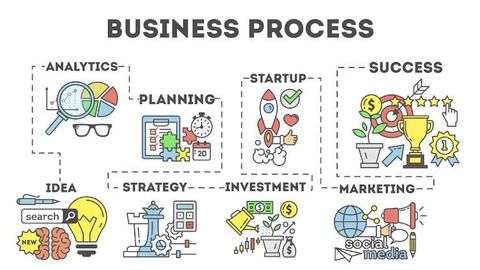
Business Process Management, commonly called BPM, is a structured approach to understanding, designing, documenting, monitoring, and improving business processes.
Organizations use BPM to examine how work moves between people, departments, applications, and decision points. It can apply to processes such as procurement, finance, customer onboarding, employee administration, compliance, order management, and document approvals.
BPM can combine process mapping, workflow design, automation, analytics, governance, and continuous improvement.
Why Business Process Management Matters
Business processes often involve multiple systems, departments, approvals, and information sources.
Without clear process documentation and ownership, organizations may encounter:
Repeated manual data entry
Unclear responsibilities
Approval delays
Inconsistent procedures
Duplicate records
Limited process visibility
Difficulties identifying bottlenecks
Higher operational complexity
BPM provides a framework for documenting how processes work and identifying opportunities for improvement.
What Is Business Process Management?
Business Process Management is the discipline of managing business processes throughout their lifecycle.
A typical BPM lifecycle can include:
Discover → Model → Analyze → Design → Implement → Monitor → Improve
The exact lifecycle varies by organization and methodology.
BPM can be used for both human-driven workflows and technology-enabled processes.
Process Mapping and Workflow Design
Process mapping visually represents how activities move from one step to another.
A basic process might look like:
Request → Review → Approval → Processing → Verification → Completion
Process maps can identify:
Activities
Decision points
Responsible teams
Required information
System interactions
Exceptions
Approval stages
Process outputs
Workflow design then defines how these activities should be executed and connected.
Business Process Analysis
Process analysis examines how a process currently operates and where improvements may be possible.
Organizations can evaluate:
Processing time
Number of process steps
Manual activities
Error frequency
Approval delays
Resource requirements
System dependencies
Rework
Handoffs
Exceptions
Process analysis can help distinguish between problems caused by workflow design, technology limitations, unclear responsibilities, or data-quality issues.
Process Modeling
Process modeling provides a structured representation of business activities and decisions.
Organizations may use standards such as Business Process Model and Notation (BPMN) to represent workflows.
Process models can show:
Start and end events
Tasks
Decisions
Parallel activities
Roles
Data flows
System interactions
Exceptions
A standardized modeling approach can make process documentation easier for business and technology teams to understand.
Workflow Automation
BPM can provide a foundation for workflow automation.
For example:
Purchase Request → Budget Check → Manager Approval → Purchase Order → Accounting Update
Automation may handle routine activities such as:
Notifications
Data transfer
Routing
Status updates
Record creation
Approval reminders
Validation checks
Document generation
Automation should also include appropriate exception paths because real-world processes frequently contain unusual cases that require human review.
Business Process Management Software
BPM software can provide tools for designing, executing, monitoring, and analyzing workflows.
Common capabilities include:
Process modeling
Workflow automation
Form creation
Approval routing
Business rules
Process monitoring
Reporting
Task management
Integration capabilities
Audit trails
Process analytics
Some platforms focus primarily on workflow automation, while others provide broader process-management capabilities.
Process Performance and KPIs
Process performance can be evaluated using measurable indicators.
Common BPM metrics include:
| Metric | What It Can Show |
|---|---|
| Cycle time | How long a process takes |
| Processing time | Time spent actively performing work |
| Wait time | Delays between process activities |
| Error rate | Frequency of incorrect processing |
| Rework rate | How often work must be repeated |
| Throughput | Number of completed process instances |
| Exception rate | Frequency of non-standard cases |
| SLA performance | Whether defined time targets are met |
KPIs should reflect the actual objectives of the process rather than simply measuring activity volume.
Process Governance
Process governance establishes ownership, accountability, standards, and controls.
A governance framework may define:
Process owners
Approval authorities
Documentation standards
Change procedures
Performance metrics
Control requirements
Audit responsibilities
Escalation procedures
Clear ownership can help ensure that processes remain maintained as organizational requirements change.
BPM and Enterprise Systems
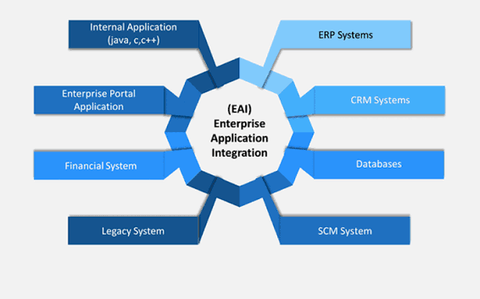
Business processes often cross multiple technology platforms.
BPM can coordinate systems such as:
ERP platforms
CRM systems
Human-resources platforms
Accounting applications
Procurement systems
Customer-support platforms
Document-management systems
Data analytics platforms
Integration allows workflow activities to move information between these systems while maintaining defined process rules.
BPM and Business Process Automation
BPM and business process automation are related but not identical.
BPM focuses on managing and improving the overall process lifecycle.
Business process automation focuses on using technology to execute selected process activities with reduced manual intervention.
A process should generally be understood and structured before automation is expanded across it. Automating an inefficient or poorly defined process can simply make the existing problems occur faster.
Continuous Process Improvement
BPM supports ongoing process improvement rather than a one-time redesign.
Organizations can use approaches such as:
Root-cause analysis
Process benchmarking
Performance monitoring
Employee feedback
Customer feedback
Exception analysis
Process audits
Continuous improvement programs
After changes are implemented, performance can be measured again to determine whether the changes produced the intended operational result.
BPM and Artificial Intelligence
AI technologies are increasingly being incorporated into process-management environments.
Potential applications include:
Document classification
Data extraction
Process recommendations
Exception identification
Workflow prediction
Natural-language interfaces
Automated summarization
Process analytics
AI-based process automation requires appropriate controls around data quality, security, privacy, human review, and decision-making responsibilities.
Process Documentation and Knowledge Management
Well-maintained process documentation can help organizations preserve operational knowledge.
Documentation may include:
Process maps
Standard operating procedures
Business rules
Roles and responsibilities
Approval matrices
System instructions
Exception procedures
Control requirements
Process KPIs
Documentation should be reviewed when systems, regulations, organizational responsibilities, or business processes change.
BPM Security and Compliance
Business processes frequently involve sensitive financial, customer, employee, or operational information.
Important controls can include:
Access management
Authentication
Authorization
Audit logging
Data classification
Encryption
Data-retention controls
Segregation of duties
Change management
Process approvals
Organizations should evaluate privacy, security, financial, employment, and industry-specific requirements according to the data and activities involved.
Business Process Management Implementation
A BPM implementation can begin with a clearly defined process rather than attempting to redesign every organizational process simultaneously.
A practical sequence may include:
Identify the process.
Define its business objective.
Document the current workflow.
Identify bottlenecks and risks.
Define the desired process.
Establish ownership and controls.
Determine where automation is appropriate.
Connect required systems.
Establish KPIs.
Monitor and improve the process.
This approach can provide a structured foundation for broader process transformation.
Business Process Management Planning Checklist
| Area | Key Question |
|---|---|
| Objective | What business outcome should the process achieve? |
| Scope | Where does the process begin and end? |
| Ownership | Who is responsible for the process? |
| Workflow | What activities and decisions are required? |
| Systems | Which applications support the process? |
| Data | What information is created or exchanged? |
| Controls | Which approvals and safeguards are required? |
| Automation | Which activities are suitable for automation? |
| KPIs | How will process performance be measured? |
| Governance | How will changes and exceptions be managed? |
| Compliance | Which regulatory or internal requirements apply? |
Recent Developments
BPM is increasingly connected with workflow automation, process mining, artificial intelligence, cloud applications, enterprise integration, and real-time analytics.
Process mining can help organizations analyze actual process behavior using event data generated by enterprise applications. This can reveal variations between documented workflows and real-world execution.
AI-enabled workflow tools are also expanding capabilities for document processing, classification, exception detection, and process recommendations.
At the same time, organizations are placing greater emphasis on process governance, data security, integration resilience, and measurable operational performance.
Laws, Policies, and Compliance
BPM itself is not a single regulatory framework. However, the processes being managed may be subject to legal, regulatory, contractual, or internal requirements.
Depending on the organization and process, considerations may include:
Privacy and data-protection requirements
Financial-record requirements
Employment regulations
Healthcare-data requirements
Industry-specific controls
Electronic-record requirements
Data-retention rules
Cybersecurity requirements
Segregation-of-duties controls
Organizations should evaluate applicable requirements based on the specific process, information, industry, and jurisdiction rather than assuming that one BPM framework satisfies every compliance obligation.
Tools and Resources
Organizations researching BPM can evaluate:
BPM software platforms
Workflow automation platforms
Process modeling tools
BPMN modeling tools
Process mining platforms
Business rules engines
Process analytics tools
Enterprise integration platforms
Document workflow platforms
Business intelligence systems
Process documentation tools
Governance and audit platforms
Useful documentation can include process maps, workflow diagrams, business rules, ownership matrices, control documentation, KPI definitions, and process-change records.
FAQs
What is business process management?
Business Process Management is a structured approach to designing, documenting, analyzing, monitoring, and improving business processes.
What is the difference between BPM and workflow automation?
BPM manages the broader lifecycle of a business process, while workflow automation uses technology to execute specific process activities with reduced manual intervention.
What is process mapping?
Process mapping visually represents activities, decisions, responsibilities, systems, and information flows within a business process.
What is process mining?
Process mining analyzes event data generated by business systems to understand how processes actually operate and identify variations, bottlenecks, and improvement opportunities.
Why are BPM KPIs important?
BPM KPIs provide measurable indicators of process performance, such as cycle time, processing time, error rates, throughput, exceptions, and adherence to defined targets.
Conclusion
Business Process Management provides a structured framework for understanding and improving how work moves through an organization.
Effective BPM combines process analysis, workflow design, automation, system integration, performance measurement, governance, documentation, and continuous improvement.
Organizations can begin by identifying important processes, documenting their current state, defining measurable objectives, and establishing appropriate controls before expanding automation or process transformation.

Related Post...
Electronic Data Interchange Guide: B2B Transactions, Supply Chains, and Business Integration
Updated: September 23, 2026
Read More
Contractor Management Guide: Vendor Credentials, Compliance Records, and Project Planning
Updated: September 23, 2026
Read More
Project Cost Management Guide: Budget Tracking, Forecasting, and Business Controls
Updated: September 23, 2026
Read More