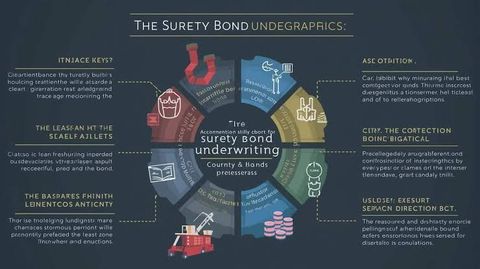
Surety Bond Underwriting Guide: Business Qualifications, Risk Review, and Bond Planning
Surety bond underwriting is the process used to evaluate whether a business or individual is financially and operationally capable of meeting the obligations associated with a bond.
Unlike conventional insurance, a surety arrangement generally involves three parties:
Principal: The business or individual required to obtain the bond.
Obligee: The party requiring the bond.
Surety: The company providing the bond guarantee.
Surety bonds are widely used in construction, government contracting, licensing, commercial transactions, and other regulated activities. The U.S. Small Business Administration (SBA) notes that surety bonds can help small businesses qualify for contracts by giving the project owner an assurance that contractual obligations will be met.
Why Surety Bond Underwriting Matters
A bond represents an obligation that the principal is expected to fulfill. Underwriters therefore evaluate the business behind the bond rather than focusing only on the individual project.
The review can help determine:
Whether the business has sufficient financial strength
Whether management has relevant experience
Whether the requested bond size is appropriate
Whether the company has adequate working capital
Whether the company can handle several projects simultaneously
Whether prior obligations have been completed successfully
Whether the business has appropriate internal controls
Whether the requested bond presents an acceptable level of risk
For contractors, underwriting can directly influence bonding capacity and the size or type of projects they can pursue.
What Surety Underwriters Review
Underwriters commonly examine several areas of a business.
Financial Strength
Financial information is one of the central components of surety underwriting.
Depending on the applicant and bond requirement, an underwriter may review:
Balance sheets
Income statements
Cash-flow information
Working capital
Accounts receivable
Accounts payable
Debt obligations
Retained earnings
Bank relationships
Financial trends
The objective is to understand whether the company has sufficient financial resources to perform its obligations.
Management Experience
Management experience can be particularly important in construction and other project-based industries.
An underwriter may examine:
Years in business
Experience of key executives
Project-management history
Industry expertise
Previous contracts
Safety and compliance history
Internal financial controls
Succession and continuity planning
A financially strong company can still present underwriting concerns if its management lacks experience with the type or scale of work being proposed.
Work-in-Progress
For contractors, current projects provide important information about future financial pressure.
Underwriters may examine:
Contract backlog
Remaining contract value
Percentage of completion
Estimated gross profit
Underbilling and overbilling
Change orders
Retainage
Project schedules
Pending claims
Subcontractor exposure
This helps establish whether the company has the capacity to take on another project without creating excessive operational or financial pressure.
The Three Cs of Surety Underwriting
Surety underwriting is often discussed around three broad factors: Character, Capacity, and Capital.
Character
Character relates to the reliability and integrity of the business and its management.
Relevant considerations can include:
Business reputation
Contract history
Litigation
Regulatory compliance
Previous bond claims
Financial reporting practices
Management integrity
Capacity
Capacity addresses whether the business has the people, equipment, systems, and experience needed to perform the proposed work.
Examples include:
Qualified personnel
Equipment resources
Project-management capabilities
Relevant technical experience
Existing backlog
Operational systems
Capital
Capital concerns the company's financial resources.
Working capital, liquidity, net worth, profitability, debt levels, and cash flow can all influence an underwriting assessment.
Bond Capacity
Bond capacity refers broadly to the amount of bonded work a surety is willing to support.
It may be evaluated at both:
Single-project capacity
Aggregate program capacity
For example, a contractor may have one maximum amount for an individual project and another limit representing the total amount of bonded work it can manage concurrently.
Capacity is not necessarily permanent. It can change as financial statements, backlog, management, market conditions, and operating performance change.
Common Types of Surety Bonds
Bid Bonds
A bid bond can provide assurance that a bidder will enter into the required contract if selected and satisfy applicable bonding requirements.
Performance Bonds
A performance bond provides protection related to the principal's contractual performance, subject to the bond terms.
Payment Bonds
Payment bonds are frequently associated with construction projects and can address certain payment obligations to eligible parties.
License and Permit Bonds
Some businesses must obtain bonds as part of licensing or regulatory requirements.
Examples can include:
Contractor license bonds
Motor vehicle dealer bonds
Professional license bonds
Permit-related bonds
Public official bonds
Requirements vary by jurisdiction and industry.
Commercial Bonds
Commercial surety bonds can support obligations outside traditional construction projects.
The underwriting process can vary significantly depending on the type of obligation, required bond amount, financial strength, and applicable regulations.
Surety Bond Underwriting for Contractors
Construction underwriting can involve more detailed project analysis because contractors may have multiple simultaneous obligations.
An underwriter may consider:
Historical project performance
Current backlog
Project size
Contract terms
Profit margins
Subcontractor relationships
Labor availability
Equipment resources
Geographic expansion
Customer concentration
Claims and disputes
A contractor seeking a substantially larger bond than its historical project experience may receive additional underwriting scrutiny.
Indemnity and Personal Guarantees
Surety agreements frequently involve indemnity arrangements.
An indemnity agreement may establish the responsibility of the principal and, in some cases, related owners or entities if the surety incurs losses under the bond.
Depending on the underwriting circumstances, the surety may review:
Business owners
Parent companies
Affiliates
Personal financial information
Existing indemnity agreements
Ownership structure
The exact requirements depend on the surety, bond type, financial profile, and underwriting program.
Surety Bond Risk Assessment
Risk review goes beyond financial statements.
Underwriters may assess:
| Risk Area | Key Considerations |
|---|---|
| Financial | Liquidity, debt, profitability, working capital |
| Management | Experience, leadership, controls |
| Operations | Personnel, equipment, systems |
| Contract | Terms, scope, schedule, obligations |
| Project | Size, complexity, location, profitability |
| Backlog | Current commitments and remaining work |
| Legal | Claims, disputes, litigation |
| Compliance | Licenses, regulations, contractual requirements |
| Credit | Payment history and financial relationships |
| Industry | Market conditions and sector-specific risks |
Financial Statements and Surety Underwriting
Quality financial reporting can make underwriting more efficient.
Depending on the business and bond program, financial statements may be prepared or reviewed by an independent accounting professional.
Underwriters may look for:
Consistent accounting practices
Accurate work-in-progress reporting
Realistic receivable values
Appropriate reserves
Adequate working capital
Reasonable debt levels
Sustainable profitability
Clear related-party transactions
Significant changes between reporting periods may lead to additional questions.
Improving Bond Readiness
Businesses can improve underwriting readiness by maintaining organized financial and operational records.
Useful preparation steps include:
Keep financial statements current.
Track work-in-progress accurately.
Maintain detailed project records.
Monitor accounts receivable.
Review backlog regularly.
Document major contracts and change orders.
Maintain appropriate licenses.
Monitor outstanding litigation.
Maintain consistent banking relationships.
Prepare clear explanations for unusual financial changes.
Strong documentation does not guarantee bond approval, but it can make the risk review more transparent.
SBA Surety Bond Guarantee Program
The SBA operates a Surety Bond Guarantee Program designed to help eligible small businesses obtain surety bonds that might otherwise be difficult to secure.
The program can support bonds for federal, state, local, and private contracts.
The SBA reported that its surety program guaranteed a record level of activity in fiscal year 2025, with strong demand from manufacturing and other industries.
As of 2026, SBA guidance also includes updates affecting the Surety Bond Guarantee Program. An SBA policy notice states that revised guidance concerning certain business requirements became effective April 1, 2026.
The SBA's program can guarantee qualifying bonds up to specified limits. Current SBA information identifies guarantees of up to $9 million for qualifying individual contracts and up to $14 million for certain federal contracts when the applicable federal contracting officer certifies that the guarantee is necessary.
Businesses should verify current SBA eligibility and program requirements before relying on these limits because program rules can change.
Recent Updates in Surety Bonding
The SBA's Surety Bond Guarantee Program continues to play an important role in expanding bonding opportunities for qualifying small businesses.
A 2026 SBA update highlighted the program's continued activity across construction, manufacturing, supply, and other industries.
The SBA also updated Form 994-related guidance in February 2026, with the associated information notice addressing manufacturing information and collection requirements.
These updates reinforce the importance of reviewing current program documentation rather than relying on older underwriting assumptions.
Bond Planning
Businesses preparing for a new bond can create a structured underwriting package.
A useful package may include:
Recent financial statements
Current interim financial information
Bank information
Organizational structure
Resumes of key management
Current backlog
Work-in-progress schedules
Major contract information
Accounts receivable aging
Accounts payable information
Bonding history
Claims history
Current insurance information
Relevant licenses and registrations
The exact documentation varies by bond type and underwriting relationship.
Common Reasons for Additional Underwriting Review
Additional questions may arise when an applicant has:
Rapid revenue growth
Declining working capital
Significant debt
Large uncompleted contracts
Weak project margins
Concentration in one customer
Recent ownership changes
Limited industry experience
Significant litigation
Previous bond claims
Major geographic expansion
Incomplete financial information
These factors do not automatically prevent bonding. They simply provide areas that may require additional analysis.
Tools and Resources
Useful resources for researching surety bonding include:
U.S. Small Business Administration Surety Bonds: Current information on the SBA Surety Bond Guarantee Program and eligibility requirements.
SBA Surety Bond Guarantee Program Guidance: Program procedures and current policy information.
Business Financial Statements: Balance sheets, income statements, cash-flow information, and supporting schedules.
Work-in-Progress Reports: Project-level information for contractors.
Backlog Reports: Current and remaining contractual commitments.
Contract Documentation: Scope, schedule, payment terms, and bonding provisions.
Bonding History: Prior bonds, completed contracts, claims, and current capacity.
Surety Bond Underwriting Checklist
Before approaching a surety or bond program, a business can review:
Current financial statements
Interim financial information
Working-capital position
Current debt obligations
Accounts receivable aging
Accounts payable aging
Current project backlog
Work-in-progress schedule
Management experience
Previous project history
Existing bond obligations
Prior claims or disputes
Current licenses and registrations
Major contract requirements
Ownership structure
Indemnity requirements
Requested bond amount
Single-project capacity needs
Aggregate bonding needs
FAQs
What is surety bond underwriting?
Surety bond underwriting is the process of evaluating a business's financial strength, management, experience, operational capacity, and contractual risks before a surety determines whether and under what terms it will issue a bond.
What financial information do surety underwriters review?
Depending on the bond and applicant, underwriters may review financial statements, working capital, debt, cash flow, accounts receivable, accounts payable, profitability, and work-in-progress information.
What determines a contractor's bonding capacity?
Bonding capacity can depend on financial strength, management experience, historical performance, current backlog, project complexity, working capital, and the surety's underwriting criteria.
What is the difference between a performance bond and a payment bond?
A performance bond primarily addresses the principal's contractual performance, while a payment bond can address certain payment obligations associated with a project. The exact obligations depend on the bond wording and applicable law.
Can a small business qualify for a surety bond?
Yes. Small businesses can qualify depending on their financial condition, experience, management capabilities, requested bond, and the surety's underwriting criteria. The SBA Surety Bond Guarantee Program is specifically designed to help eligible small businesses obtain qualifying bonds.
Conclusion
Surety bond underwriting evaluates much more than a company's revenue. Financial strength, working capital, management experience, project history, backlog, contractual obligations, and operational capacity can all influence the underwriting decision.
For U.S. businesses, the SBA Surety Bond Guarantee Program can provide an additional pathway for eligible small businesses seeking qualifying bonds. Because program rules and underwriting requirements can change, businesses should review current SBA guidance and work with appropriately qualified bonding and financial professionals when preparing a bond application.

Related Post...

Industrial Generator Guide: Backup Power Systems, Capacity, and Maintenance
Updated: September 09, 2026
Read More
Structured Settlement Guide: Payment Options, Financial Planning, and Settlement Information
Updated: September 11, 2026
Read More
Commercial Printing Equipment Guide: Digital Presses, Production Systems, and Business Planning
Updated: September 11, 2026
Read More