Smart Home Energy Guide: Connected Controls, Energy Monitoring, Automation Technology, and Practical Tips
Smart home energy technology combines connected devices, sensors, software, and automated controls to help households monitor and manage energy use.
Common technologies include smart thermostats, connected lighting, energy monitors, smart plugs, connected appliances, automated shades, and home energy-management systems.
These technologies can provide households with more information about energy consumption and allow certain devices to respond automatically to schedules, occupancy, temperature, or other conditions.
Why Smart Home Energy Management Matters
Household energy use can change throughout the day depending on weather, occupancy, appliances, heating and cooling requirements, and daily routines.
Connected energy systems can help homeowners understand these patterns through:
Energy monitoring
Automated temperature controls
Lighting schedules
Appliance controls
Occupancy sensing
Remote device management
Energy-use notifications
Load monitoring
Home energy dashboards
Connected renewable-energy systems
The usefulness of each technology depends on the home's equipment, connectivity, electrical system, household behavior, and the capabilities of the selected devices.
Smart Thermostats and HVAC Controls
Heating and cooling can represent a significant portion of household energy use.
Smart thermostats can provide features such as:
Programmable schedules
Remote temperature adjustment
Occupancy detection
Temperature sensors
Usage reports
Automated scheduling
Integration with other connected devices
Some systems can adjust temperature settings based on schedules or detected occupancy.
However, compatibility should be confirmed before installing a smart thermostat because HVAC wiring, equipment type, voltage requirements, and control systems can differ.
Home Energy Monitoring
Energy-monitoring technology can provide information about household electricity consumption.
Depending on the system, monitoring may show:
Total electricity consumption
Current power demand
Historical usage
Appliance-level consumption
Daily or monthly trends
Peak-use periods
Energy-use alerts
Whole-home energy monitors can provide a broader view of electricity consumption, while smart plugs and connected devices can provide more localized information.
Monitoring data can help identify unusual consumption patterns and areas where household energy use may be reduced.
Smart Lighting and Connected Controls
Smart lighting systems can allow users to control lights through schedules, sensors, mobile applications, or connected home platforms.
Common capabilities include:
Automated schedules
Motion-based activation
Remote control
Dimming
Occupancy-based settings
Scene controls
Integration with other smart-home systems
Automation can also reduce unnecessary operation when lights are configured to respond to occupancy or predefined schedules.
Smart Plugs and Appliance Monitoring
Smart plugs can add connectivity to certain compatible electrical devices.
Depending on the product, a smart plug may provide:
Remote switching
Scheduling
Energy monitoring
Automation rules
Usage notifications
Not every appliance should be connected to a smart plug. High-power equipment and appliances with specialized electrical requirements may require different controls or professional evaluation.
Users should follow manufacturer instructions and electrical-safety requirements.
Connected Appliances
Modern appliances can incorporate network connectivity and energy-related features.
Examples include:
Connected refrigerators
Smart washing machines
Connected dryers
Smart water heaters
Connected dishwashers
Smart cooking equipment
Potential capabilities include scheduling, monitoring, notifications, diagnostics, and integration with broader home-automation platforms.
Energy-related functionality varies considerably by appliance and manufacturer.
Home Energy Management Systems
A home energy-management system can connect multiple energy-related devices into a coordinated platform.
A system may integrate:
Sensors → Energy Data → Analytics → Automation Rules → Connected Devices
For example, a household may use energy-monitoring data alongside thermostat controls, lighting schedules, battery storage, or electric-vehicle charging equipment.
The level of automation depends on the system architecture and device compatibility.
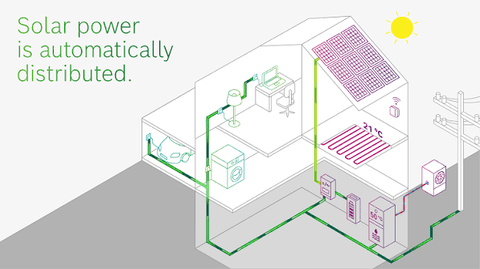
Smart Home Energy and Solar Power
Smart-home technology can also interact with residential solar and battery systems.
A connected energy system may monitor:
Solar generation
Household electricity consumption
Battery charge levels
Grid electricity usage
Energy flows
Electric-vehicle charging
Some systems can coordinate energy use with solar production or battery operating schedules.
Solar, battery, and electrical-system installations involve additional technical and safety requirements and should be designed and installed according to applicable standards and manufacturer specifications.
Smart EV Charging
Electric-vehicle charging can become another component of household energy management.
Connected EV chargers may provide:
Charging schedules
Remote controls
Energy monitoring
Charging-status notifications
Load-management features
Integration with home-energy platforms
Load-management capabilities can be particularly relevant where multiple high-power electrical loads operate simultaneously.
Electrical capacity and charger compatibility should be evaluated before installation.
Automation Technology
Smart home automation can connect energy-related devices through predefined rules.
Examples include:
Adjusting the thermostat when occupants leave
Turning selected lights off according to a schedule
Sending alerts when energy consumption changes
Scheduling EV charging
Coordinating compatible appliances
Monitoring home-energy conditions remotely
Automation should be configured carefully because incorrect settings can create unwanted device behavior or affect comfort and equipment operation.
Connectivity and Interoperability
Smart-home energy systems often depend on communication technologies and software platforms.
Connectivity can involve:
Wi-Fi
Bluetooth
Thread
Zigbee
Ethernet
Matter-compatible devices
Manufacturer-specific platforms
Interoperability is important because devices from different manufacturers may not provide identical features or compatibility.
Before expanding a smart-home system, users should check supported communication standards, required hubs, software compatibility, security updates, and device lifecycle considerations.
Cybersecurity and Privacy
Connected energy devices can collect information about household activity and energy consumption.
Security considerations may include:
Strong account authentication
Unique passwords
Multi-factor authentication where available
Current firmware
Secure home Wi-Fi
Appropriate network configuration
Device-access controls
Software updates
Privacy settings
Energy-use patterns can potentially reveal information about household routines, so users should review the privacy practices of connected-device platforms and understand what information is collected and shared.
Practical Smart Home Energy Planning
A practical approach can begin with monitoring before adding extensive automation.
A basic sequence is:
Monitor → Identify Patterns → Set Priorities → Automate → Review
For example, a household might first monitor electricity consumption, identify major energy-use periods, and then determine whether thermostat scheduling, lighting controls, appliance monitoring, or other automation could address specific patterns.
This approach can help avoid adding technology without a clear household use case.
Recent Developments
Smart-home energy management continues to evolve alongside connected-device standards, distributed energy resources, residential batteries, solar generation, and electric vehicles.
Important developments include:
Greater interoperability between connected devices
Wider use of energy dashboards
Smart load management
Integration of home batteries
Connected EV charging
Automated demand management
More detailed household energy analytics
Integration with distributed-energy systems
The continued development of interoperability standards can also make it easier for compatible devices from different manufacturers to communicate within a connected home.
Smart Home Energy Planning Checklist
Before expanding a smart-home energy system, consider:
Identify major household energy loads
Review current electricity-use patterns
Determine which devices need monitoring
Check thermostat and HVAC compatibility
Review electrical requirements
Check device interoperability
Confirm connectivity requirements
Review cybersecurity settings
Understand privacy practices
Configure appropriate automation rules
Keep device software updated
Review energy data periodically
Consider future solar, battery, or EV integration
Tools and Resources
Useful resources for smart-home energy planning include:
Smart thermostats
Whole-home energy monitors
Smart plugs
Connected lighting systems
Home energy-management platforms
Smart EV chargers
Residential solar monitoring systems
Battery-management interfaces
Utility energy dashboards
Connected appliance platforms
Home-network security tools
Manufacturer compatibility documentation
Energy information from utilities and government energy agencies can also provide useful context when evaluating household consumption and efficiency opportunities.
Frequently Asked Questions
What is smart home energy management?
Smart home energy management uses connected devices, sensors, software, and automation to monitor and manage household energy use.
What devices can help monitor home energy use?
Whole-home energy monitors, smart plugs, connected appliances, smart thermostats, and compatible energy-management systems can provide different levels of energy-use information.
Can a smart thermostat help manage energy use?
A smart thermostat can provide scheduling, remote controls, occupancy features, and usage information. Its usefulness depends on the HVAC system, settings, household behavior, and device capabilities.
Can smart home systems work with solar panels and batteries?
Compatible systems can integrate solar generation, battery storage, household consumption, and other energy devices. Compatibility and electrical-system requirements should be confirmed before installation.
Are smart home energy devices secure?
Security depends on the device, software, network configuration, manufacturer practices, and user settings. Strong authentication, software updates, secure Wi-Fi, and appropriate privacy controls can help reduce security risks.
Conclusion
Smart home energy technology combines monitoring, connected controls, automation, and energy-management systems to provide households with greater visibility into electricity use.
Smart thermostats, energy monitors, connected lighting, smart plugs, EV chargers, solar systems, and batteries can serve different roles within a connected home.
A practical approach is to first understand household energy patterns, then select compatible technologies that address specific needs. Because electrical, cybersecurity, privacy, and equipment requirements vary, users should follow manufacturer instructions and consult appropriately qualified professionals when specialized installation or technical evaluation is required.

Related Post...
Smart Home Camera Guide: Video Monitoring, Connected Security, Privacy Factors, and Technology Insights
Updated: September 29, 2026
Read More
Construction Scheduling Guide: Project Timelines, Resource Planning, and Risk Control
Updated: September 16, 2026
Read More