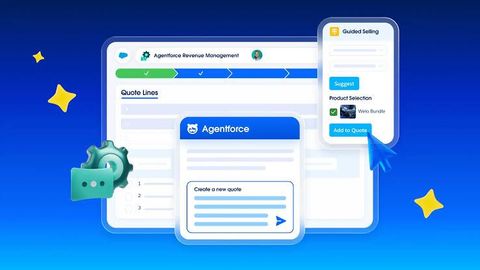
CPQ Software Guide: Product Configuration, Quoting Workflows, and Sales Planning
CPQ stands for Configure, Price, Quote. CPQ software helps businesses manage complex product configurations, pricing rules, quote preparation, approvals, and related sales workflows within a structured digital system.
CPQ platforms are particularly relevant for organizations with configurable products, multiple pricing variables, product dependencies, discount rules, contract terms, or complex approval requirements.
Instead of relying entirely on spreadsheets, disconnected documents, or manual calculations, CPQ technology can connect product configuration, pricing logic, quoting, approvals, and customer records.
A typical CPQ workflow can look like:
Product Selection → Configuration → Pricing → Approval → Quote → CRM Update → Order Handoff
The exact workflow depends on the organization's products, pricing model, CRM environment, approval structure, and business requirements.
Why CPQ Software Matters
Complex product catalogs can make quoting difficult when different combinations of products, options, quantities, discounts, and contract terms need to be evaluated.
CPQ software can help organizations establish consistent rules across these processes.
Common business objectives include:
Standardizing product configurations
Applying pricing rules consistently
Reducing manual quote preparation
Managing discount approvals
Improving quote accuracy
Connecting quoting with CRM systems
Supporting sales forecasting
Maintaining product and pricing data
Creating structured approval workflows
Improving visibility into sales operations
CPQ can also provide a centralized environment for managing pricing and configuration logic, particularly when product combinations become difficult to manage manually.
What Does CPQ Software Do?
CPQ platforms generally combine three core capabilities.
Configure
The configuration component helps users select compatible products, options, quantities, features, and combinations.
Price
The pricing component applies predefined pricing rules, discounts, volume considerations, customer-specific pricing, currencies, contract terms, or other applicable variables.
Quote
The quoting component turns the configured and priced solution into a formal quote or proposal document.
Modern CPQ platforms can extend these capabilities with workflow automation, analytics, contract management integrations, CRM connectivity, and order-management processes.
Product Configuration
Product configuration is one of the central functions of CPQ technology.
Businesses may have products with:
Multiple models
Optional features
Product dependencies
Compatibility rules
Technical specifications
Quantity requirements
Bundled components
Subscription elements
Geographic restrictions
Customer-specific configurations
Configuration rules can help prevent incompatible combinations from being included in a quote.
For example, a manufacturer may require a particular component whenever another option is selected. A CPQ system can encode that relationship into the configuration process.
This creates a more structured approach to complex product selection.
Pricing Management
Pricing management is another important part of CPQ.
Pricing logic can include:
Base prices
Volume-based pricing
Tiered pricing
Customer-specific pricing
Contract pricing
Discount rules
Promotional adjustments
Recurring charges
Usage-based pricing
Regional pricing
Currency conversion
Approval thresholds
Centralized pricing rules can help reduce inconsistencies between different quoting teams.
Pricing governance can also establish approval requirements when a proposed discount or commercial adjustment exceeds a defined threshold.
Quote Automation
Traditional quote preparation may involve manually collecting product information, calculating prices, checking discounts, preparing documents, and obtaining approvals.
CPQ software can automate many of these steps.
A typical workflow may include:
Select the customer
Choose products or packages
Configure available options
Apply pricing rules
Add approved discounts
Calculate applicable amounts
Route the quote for approval
Generate the quote document
Record the quote in the CRM
Continue toward order processing
Automation can make quoting workflows more consistent and easier to track.
CPQ and CRM Integration
CPQ platforms are frequently connected with customer relationship management systems.
CRM integration can allow organizations to connect:
Customer records
Opportunities
Product catalogs
Pricing information
Quotes
Sales stages
Approval records
Forecasting information
Order information
When CPQ and CRM systems are integrated, sales teams can work with customer and opportunity information without repeatedly entering the same data into separate systems.
The quality of the integration depends on data architecture, APIs, synchronization rules, security controls, and the specific software environment.
Approval Workflows
Pricing and quoting often require internal approval.
Approval requirements may depend on:
Discount percentage
Contract duration
Quote value
Customer category
Product combination
Payment terms
Geographic region
Margin thresholds
Non-standard clauses
CPQ software can route quotes to appropriate reviewers based on predefined rules.
This can create an auditable workflow in which organizations can identify who approved a quote, when the approval occurred, and which version was approved.
CPQ for Sales Operations
CPQ technology can become part of a broader sales-operations environment.
Sales operations teams may use CPQ data to analyze:
Quote volume
Quote turnaround time
Discount patterns
Product combinations
Approval activity
Pricing exceptions
Conversion patterns
Sales-cycle information
Revenue opportunities
Forecasting inputs
This information can support decisions involving product strategy, pricing governance, sales processes, and operational planning.
CPQ and Revenue Operations
Revenue operations, often abbreviated as RevOps, brings sales, marketing, customer-facing processes, technology, and analytics into a coordinated operating model.
CPQ can contribute to RevOps by connecting commercial processes across multiple systems.
A broader revenue workflow might look like:
Lead → Opportunity → Configuration → Pricing → Quote → Contract → Order → Revenue Data
Integrating these stages can provide better visibility into the movement from customer opportunity to commercial transaction.
CPQ for Manufacturing and Industrial Businesses
Manufacturing businesses can have especially complex configuration requirements.
Products may involve:
Technical specifications
Engineering constraints
Component dependencies
Manufacturing options
Production quantities
Custom configurations
Installation requirements
Regional specifications
CPQ software can help translate these rules into a guided configuration process.
Integration with product lifecycle management, enterprise resource planning, and customer relationship management systems can further connect product data with commercial workflows.
CPQ for Subscription and Recurring Revenue Models
CPQ is also relevant to businesses using recurring revenue models.
A quote may include:
Subscription plans
User quantities
Usage levels
Contract periods
Add-on features
Renewal terms
Implementation components
Recurring and one-time charges
CPQ systems can help calculate these components and maintain consistency between pricing rules and customer agreements.
For recurring models, integration with contract-management, billing, and revenue systems may be particularly important.
CPQ Analytics
CPQ analytics can provide insight into how pricing and quoting processes perform.
Common metrics include:
| Metric | Purpose |
|---|---|
| Quote volume | Measures quoting activity |
| Quote turnaround time | Tracks workflow speed |
| Discount rate | Examines pricing adjustments |
| Approval frequency | Identifies approval workload |
| Configuration errors | Highlights rule or process issues |
| Quote conversion | Measures movement from quotes to transactions |
| Average quote value | Tracks commercial value |
| Pricing exceptions | Identifies non-standard pricing activity |
| Product mix | Shows configuration and product patterns |
These metrics should be interpreted according to the organization's sales model, products, market, and operating processes.
CPQ Security and Data Governance
CPQ platforms can contain commercially sensitive information.
Data may include:
Customer information
Product catalogs
Pricing data
Discount rules
Contract information
Sales opportunities
Internal approvals
Commercial terms
Organizations should consider:
Role-based access
Authentication controls
Encryption
API security
Data retention
Audit logging
Permission management
Backup procedures
Vendor security practices
Data privacy requirements
Integration with CRM, ERP, billing, and other systems also creates additional data-governance considerations.
Artificial Intelligence and CPQ
AI capabilities are increasingly being incorporated into enterprise sales and quoting workflows.
Potential applications include:
Configuration recommendations
Quote preparation assistance
Pricing analysis
Anomaly detection
Product recommendations
Natural-language configuration
Quote summarization
Approval prioritization
Sales forecasting support
AI-generated recommendations should still be evaluated against approved product rules, pricing policies, commercial controls, and organizational governance requirements.
Recent CPQ Developments
CPQ technology continues to evolve alongside CRM, ERP, RevOps, automation, and AI systems.
Recent developments include:
Greater CRM integration
AI-assisted configuration
Automated pricing analysis
Improved approval automation
Subscription pricing capabilities
Advanced product-rule management
API-based integrations
Revenue analytics
Digital quote generation
Expanded workflow automation
Organizations are also increasingly considering CPQ as part of a broader commercial technology architecture rather than as an isolated quoting application.
CPQ Implementation Planning
Before implementing CPQ software, organizations can evaluate the current quoting process.
Important questions include:
How complex are the current product configurations?
How many pricing rules exist?
Which discounts require approval?
Where do quote errors occur?
Which systems contain product information?
Which CRM or ERP platforms are already in use?
How frequently do products and prices change?
What information should be included in quotes?
Which users need configuration access?
Which reports are needed?
What security controls are required?
A clear process map can help identify where CPQ automation could provide the greatest operational value.
CPQ Planning Checklist
Organizations evaluating CPQ software can review:
Product configuration complexity
Product catalog structure
Pricing rules
Discount policies
Approval requirements
Quote templates
CRM integration
ERP integration
Contract workflow
Subscription pricing
User permissions
Data security
Reporting requirements
API requirements
Implementation resources
Data migration requirements
Ongoing governance
Tools and Resources
Organizations researching CPQ can review:
CRM documentation
ERP integration documentation
Product catalog records
Pricing policy documentation
Sales-process maps
Quote templates
Approval matrices
Product configuration rules
Sales analytics platforms
Contract-management documentation
Data-governance policies
API and integration documentation
Cybersecurity and privacy frameworks
FAQs
What does CPQ stand for?
CPQ stands for Configure, Price, Quote. CPQ software helps organizations configure products, apply pricing rules, and prepare quotes through structured workflows.
What is CPQ software used for?
CPQ software is used for complex product configuration, pricing management, quote generation, discount approvals, CRM integration, and sales-process automation.
What is the difference between CPQ and CRM?
CRM software primarily manages customer relationships, accounts, opportunities, and related sales information. CPQ focuses more specifically on product configuration, pricing, and quoting. The two systems can be integrated.
Is CPQ only for manufacturing companies?
No. CPQ can be used by manufacturers, technology companies, professional organizations, telecommunications businesses, equipment providers, and other organizations with complex product or pricing structures.
How does CPQ improve quoting workflows?
CPQ can centralize configuration and pricing rules, automate calculations, route approvals, generate quote documents, and connect quote information with other business systems.
Conclusion
CPQ software brings product configuration, pricing, quoting, approvals, and sales workflows into a structured technology environment.
For organizations with complex products or pricing models, CPQ can help standardize commercial processes and connect quoting with CRM, ERP, contract, billing, and revenue-management systems.
Effective CPQ planning begins with understanding product rules, pricing structures, approval requirements, data architecture, integration needs, security controls, and reporting requirements. A well-defined implementation plan can help organizations build a quoting workflow that aligns with broader sales and business operations.

Related Post...
Accounts Payable Automation Guide: Invoice Workflows, Approvals, and Financial Controls
Updated: September 22, 2026
Read More
Transportation Management Software Guide: Freight Planning, Routing, and Logistics Analytics
Updated: September 22, 2026
Read More
Field Service Management Software Guide: Scheduling, Dispatch, and Operations Planning
Updated: September 22, 2026
Read More