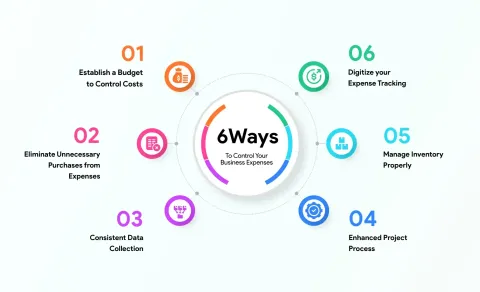
Business Expense Management Guide: Corporate Spending, Controls, and Financial Workflows
Business expense management is the process of controlling, documenting, reviewing, approving, and analyzing organizational spending.
Companies may manage expenses related to travel, employee purchases, corporate cards, software subscriptions, supplies, professional activities, and other business operations.
Modern expense management can combine accounting systems, corporate payment tools, expense reporting platforms, approval workflows, receipt capture, policy controls, and financial analytics.
The objective is to create clear spending processes while maintaining accurate records, appropriate approvals, and visibility into organizational expenses.
Why Business Expense Management Matters
Unstructured expense processes can create unnecessary administrative work and make it difficult to understand where organizational funds are being used.
A structured expense-management program can help organizations:
Establish spending policies
Standardize approval workflows
Capture receipts and supporting documentation
Reduce manual data entry
Improve accounting records
Monitor employee spending
Identify unusual transactions
Support financial reporting
Improve budget visibility
Strengthen internal controls
Expense management should be connected to broader accounting and financial-control processes rather than operating as an isolated administrative function.
Corporate Spending Policies
A spending policy establishes expectations for how employees and departments can use organizational funds.
A policy may address:
Permitted business expenses
Spending limits
Approval thresholds
Corporate-card usage
Travel-related expenses
Receipt requirements
Reimbursement procedures
Restricted purchases
Personal expenses
Documentation requirements
Expense-submission deadlines
Policies should be understandable and practical.
Organizations may use different approval requirements depending on transaction amount, department, expense category, location, or business purpose.
Expense Reporting Workflows
A typical expense workflow can include several stages:
1. Transaction
An employee or authorized representative incurs an approved business expense.
2. Documentation
Receipts, invoices, or other supporting records are collected.
3. Submission
The expense is entered into an expense-management or accounting system.
4. Review
The transaction is checked against organizational policies.
5. Approval
An authorized reviewer approves or rejects the expense.
6. Accounting
Approved transactions are assigned appropriate accounting categories and recorded.
7. Reimbursement or reconciliation
The organization reimburses the employee when appropriate or reconciles the transaction against a corporate payment account.
Automating these steps can reduce manual handoffs and create a more consistent audit trail.
Expense Management Software
Expense-management platforms can centralize spending information and automate parts of the reporting process.
Depending on the system, features may include:
Receipt capture
Expense categorization
Approval workflows
Corporate-card integration
Policy controls
Reimbursement tracking
Accounting integration
Duplicate detection
Spending dashboards
Reporting
Audit trails
When evaluating expense technology, organizations should consider integration capabilities, security, user permissions, reporting functionality, scalability, mobile access, and compatibility with existing accounting systems.
Corporate Card Management
Corporate cards can simplify organizational purchasing while creating additional control requirements.
Organizations may establish:
Individual spending limits
Department-level limits
Merchant-category restrictions
Approval requirements
Transaction monitoring
Receipt requirements
Card suspension procedures
Reconciliation processes
Card data should be monitored alongside expense records.
A transaction appearing on a corporate card statement does not automatically establish that the expense was appropriate. Organizations may still need supporting documentation and business-purpose information.
Expense Approval Controls
Approval workflows help establish accountability for organizational spending.
Organizations can configure approvals according to:
Transaction amount
Department
Expense category
Budget ownership
Employee role
Geographic location
Project
Contract
Funding source
Segregation of duties can also be important.
Where appropriate, the person requesting an expense, approving it, recording it, and reconciling the related account should not have unrestricted control over every stage of the transaction.
The exact control structure depends on the organization's size, risk profile, accounting environment, and regulatory requirements.
Travel and Entertainment Expenses
Travel and entertainment can represent a significant category of corporate spending.
Expense policies may address:
Transportation
Lodging
Meals
Ground transportation
Business events
Client-related activities
Travel advances
Documentation
Approval requirements
Organizations may establish spending limits or preferred purchasing channels while still allowing reasonable flexibility for legitimate business circumstances.
Travel-related expense data can also be analyzed to identify spending patterns and budgeting trends.
Accounts Payable and Expense Management
Expense management often overlaps with accounts payable and accounting workflows.
Organizations may need to distinguish between:
Employee reimbursements
Supplier invoices
Corporate-card transactions
Purchase orders
Recurring subscriptions
Business purchases
Integrating these categories into accounting workflows can reduce duplicate records and improve financial visibility.
For example, an approved purchase may flow from a procurement system into accounts payable, while an employee reimbursement may follow a separate expense workflow.
Expense Automation
Automation can reduce repetitive financial administration.
Examples include:
Automatic receipt extraction
Expense categorization
Approval routing
Policy alerts
Duplicate-transaction detection
Accounting-system synchronization
Reimbursement notifications
Recurring expense monitoring
Report generation
Automation should be designed with appropriate controls.
Incorrect rules can automatically approve or categorize transactions incorrectly, so organizations should establish exception handling, review procedures, and monitoring.
Expense Fraud and Irregular Spending
Expense management can also support the identification of potentially inappropriate transactions.
Organizations may monitor for patterns such as:
Duplicate submissions
Unusual transaction amounts
Repeated exceptions
Expenses outside approved categories
Missing documentation
Transactions occurring outside expected locations
Unusual corporate-card activity
Repeated policy overrides
Automated alerts can help identify transactions for additional review.
However, an unusual transaction is not necessarily fraudulent. Review processes should distinguish legitimate exceptions from potential policy violations or financial misconduct.
Financial Analytics and Reporting
Expense data can provide useful information for financial planning.
Organizations may analyze spending by:
Department
Employee
Expense category
Project
Location
Vendor
Time period
Corporate card
Business unit
Useful metrics may include:
Total expenses
Expense growth
Reimbursement volume
Approval time
Policy exception rate
Average transaction value
Corporate-card utilization
Unsubmitted expenses
Duplicate transactions
Spending by category
Financial dashboards can help managers identify trends and compare actual spending against budgets.
Expense Data and Cybersecurity
Expense systems can contain sensitive financial and employee information.
Security controls may include:
Role-based access
Multi-factor authentication
Encryption
Audit logging
Secure integrations
User-access reviews
Data-retention controls
Vendor risk assessments
Organizations should also review the security practices of external expense-management and payment technology providers.
Financial data moving between expense platforms, accounting systems, payroll systems, and banking or card environments creates additional integration points that should be appropriately protected.
AI in Expense Management
AI and machine-learning technologies can support expense-management workflows.
Potential applications include:
Receipt data extraction
Transaction categorization
Anomaly detection
Duplicate identification
Policy classification
Spending analysis
Forecasting assistance
AI-generated classifications should be reviewed where errors could affect financial reporting, employee reimbursement, tax treatment, or compliance.
Organizations should also understand what financial and employee information is processed by external AI systems and how that information is retained and protected.
Tax and Accounting Considerations
Business expenses can have accounting and tax implications.
The appropriate treatment may depend on:
Expense category
Business purpose
Entity type
Jurisdiction
Documentation
Accounting policies
Applicable tax rules
Organizations should maintain appropriate supporting records and establish procedures for determining accounting and tax treatment.
Because tax rules can change and vary according to circumstances, expense-management software should not be treated as a substitute for qualified accounting or tax guidance.
Recent Developments
Business expense management is increasingly shifting from basic reimbursement tracking toward integrated financial-control systems.
Modern platforms can connect corporate cards, expense reports, accounting systems, approval workflows, procurement records, and financial analytics.
AI-assisted receipt processing and transaction classification are also becoming more common.
At the same time, organizations are placing greater emphasis on automated controls, real-time spending visibility, cybersecurity, and integration with broader finance systems.
Laws, Policies, and Compliance Considerations
Expense management can involve multiple regulatory and policy considerations.
Depending on the organization, these may include:
Tax recordkeeping requirements
Financial reporting requirements
Corporate accounting policies
Employee reimbursement rules
Data privacy requirements
Payment-card security requirements
Internal-control expectations
Industry-specific regulations
Government contracting requirements
Organizations should determine which requirements apply to their particular activities and jurisdictions.
For U.S. businesses, tax and accounting records should be maintained according to applicable federal and state requirements, while organizations involved in government contracting may face additional documentation and spending controls.
Tools and Resources
Organizations may use several technology categories for expense management:
Expense management platforms for reporting, approval, and reimbursement workflows
Corporate card platforms for controlled organizational spending
Accounting software for financial records and reporting
Accounts payable systems for invoice and payment workflows
Procurement platforms for purchase approvals and supplier transactions
Business intelligence tools for spending analytics
Receipt-management technology for digital documentation
Fraud-monitoring tools for identifying unusual transaction patterns
When evaluating technology, organizations should consider security, integration, reporting, policy controls, scalability, user permissions, and total administrative requirements.
FAQs
1. What is business expense management?
Business expense management is the process of controlling, documenting, reviewing, approving, recording, and analyzing organizational spending.
2. What should an expense policy include?
An expense policy may define eligible business expenses, approval limits, receipt requirements, corporate-card rules, reimbursement procedures, documentation standards, and restricted transactions.
3. How does expense management software work?
Expense software can collect transaction information, capture receipts, route approvals, apply spending policies, integrate with accounting systems, and produce financial reports.
4. How can companies reduce expense errors?
Organizations can use standardized policies, automated workflows, receipt requirements, approval controls, accounting integrations, and transaction monitoring to reduce errors.
5. Can expense management systems detect fraud?
They can identify unusual patterns such as duplicate submissions, missing documentation, unusual transaction amounts, or repeated policy exceptions. Potentially problematic transactions still require appropriate human review.
Conclusion
Business expense management connects corporate spending policies, employee reimbursements, corporate cards, approval workflows, accounting processes, financial analytics, and internal controls.
A strong program should make legitimate spending straightforward while maintaining appropriate documentation, approvals, security, and financial visibility.
As organizations adopt more automated expense systems and AI-assisted financial workflows, careful attention to data security, accounting controls, privacy, and human review remains important.

Related Post...
Business Intelligence Consulting Guide: Analytics Strategy, Reporting, and Decision Support
Updated: September 15, 2026
Read More
Corporate Records Management Guide: Document Control, Retention, and Compliance Planning
Updated: September 15, 2026
Read More
Corporate Procurement Guide: Supplier Strategy, Purchasing Workflows, and Compliance
Updated: September 15, 2026
Read More