Utility Grid Modernization Guide: Smart Grid Systems, Infrastructure, and Energy Planning
The electric grid is undergoing major changes as utilities respond to rising electricity demand, distributed energy resources, renewable generation, extreme weather, aging infrastructure, electrification, and increasingly digital operations.
Grid modernization refers to the planning, upgrading, automation, monitoring, and expansion of electricity infrastructure to improve reliability, flexibility, efficiency, resilience, and operational visibility.
Modernization can involve transmission lines, distribution networks, substations, transformers, smart meters, sensors, automated switches, communications networks, energy storage, distributed generation, grid-management software, and cybersecurity controls.
The objective is not simply to replace older equipment. Modern grid infrastructure is increasingly designed to detect conditions in real time, respond to changing demand, integrate new energy resources, and recover more effectively from disruptions.
What Is Utility Grid Modernization?
Utility grid modernization is the coordinated improvement of electrical infrastructure and operational technology used to generate, transmit, distribute, monitor, and manage electricity.
Traditional grids were generally designed around centralized generation flowing toward customers. Modern systems increasingly need to accommodate:
Solar generation
Wind generation
Battery energy storage
Electric vehicles
Distributed generation
Demand-response programs
Microgrids
Two-way electricity flows
Digital monitoring
Automated controls
Advanced communications
This transition requires upgrades to both physical infrastructure and digital systems.
What Is a Smart Grid?
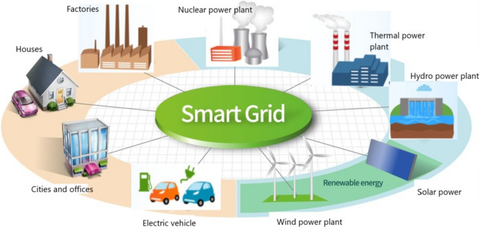
A smart grid uses sensors, communications, automation, advanced controls, and data analytics to provide greater visibility and control across the electrical network.
A smart grid can help utilities:
Monitor network conditions
Detect faults
Identify outages
Automate selected switching operations
Manage voltage
Integrate distributed energy resources
Improve demand forecasting
Coordinate energy storage
Support renewable generation
Analyze power quality
Improve operational decision-making
Smart-grid technology does not eliminate outages or guarantee uninterrupted electricity. Instead, it provides utilities with additional information and control capabilities that can support faster detection, response, and restoration.
Major Components of a Modernized Grid
Transmission Infrastructure
Transmission networks move electricity over long distances from generating facilities to substations and major load centers.
Modernization may involve:
High-voltage transmission lines
New substations
Transformer upgrades
Digital protection systems
Dynamic line monitoring
Phasor measurement units
Advanced conductors
Grid-monitoring equipment
Automated controls
Transmission planning has become increasingly important as renewable generation is often located far from major population centers.
Distribution Infrastructure
Distribution systems deliver electricity from substations to homes, businesses, industrial facilities, and other customers.
Modern distribution upgrades may include:
Automated switches
Voltage regulators
Capacitor controls
Reclosers
Distribution sensors
Smart transformers
Advanced meters
Feeder automation
Fault indicators
Underground or hardened infrastructure
Distribution automation can provide utilities with greater visibility into local network conditions.
Smart Meters
Advanced metering infrastructure, commonly known as AMI, provides digital electricity measurement and communications capabilities.
Smart meters can support:
More frequent meter readings
Remote meter monitoring
Outage notifications
Time-based rate structures
Usage analysis
Remote connection and disconnection where permitted
Demand-management programs
The exact capabilities depend on the utility's metering platform and regulatory framework.
Grid Automation
Grid automation combines sensors, communications, software, and control equipment to allow certain network functions to operate with limited manual intervention.
Examples include:
Automated fault isolation
Feeder reconfiguration
Voltage optimization
Remote switch operation
Automated restoration
Transformer monitoring
Substation automation
When a fault occurs, automated equipment may help identify the affected section and isolate it. Some systems can then reroute electricity to unaffected sections when network conditions allow.
This can reduce the number of customers affected by certain faults and potentially shorten restoration times.
Distributed Energy Resources
Distributed energy resources, or DERs, are smaller energy resources connected close to electricity customers or distribution networks.
Examples include:
Rooftop solar
Commercial solar systems
Battery storage
Fuel cells
Combined heat and power
Electric vehicles
Managed loads
DERs can provide additional flexibility, but they also create new planning challenges.
Electricity may flow in both directions through portions of a distribution network. Utilities therefore need visibility into distributed generation, voltage conditions, protection settings, and local capacity.
Energy Storage and Grid Modernization
Battery energy storage is increasingly integrated into grid planning.
Grid-connected batteries may support:
Peak-demand management
Frequency regulation
Renewable-energy integration
Voltage support
Backup power
Load shifting
Grid resilience
Capacity management
Large battery systems can respond rapidly to changing grid conditions. However, their usefulness depends on location, power rating, energy capacity, interconnection requirements, operating rules, and market participation.
Grid Resilience
Grid resilience refers to the ability of the electricity system to prepare for, withstand, adapt to, and recover from disruptive events.
Potential threats include:
Hurricanes
Wildfires
Flooding
Severe storms
Extreme temperatures
Equipment failures
Physical damage
Cybersecurity incidents
Supply-chain disruptions
Vegetation-related faults
Resilience planning may involve:
Hardening infrastructure
Vegetation management
Undergrounding in selected locations
Additional automation
Microgrids
Distributed generation
Energy storage
Spare transformers
Emergency response planning
Improved communications
Weather monitoring
Not every resilience strategy is appropriate for every location. Utilities generally evaluate risk, reliability requirements, geography, economics, and infrastructure conditions together.
Utility Transformers and Grid Capacity
Transformers are critical components of both transmission and distribution systems.
Grid modernization may require replacing or upgrading transformers because of:
Aging equipment
Increased electricity demand
Electrification
Distributed generation
Data-center growth
Electric-vehicle charging
Industrial expansion
Extreme-weather risks
Transformer availability has also become an important infrastructure-planning issue because large transformers can require long manufacturing and delivery periods.
Utilities may therefore use asset-management programs to track transformer condition, expected life, loading, failure risk, and replacement priorities.
Electrification and Increasing Electricity Demand
Electrification is changing electricity demand patterns.
Major sources of new demand may include:
Electric vehicles
Data centers
Industrial electrification
Heat pumps
Building electrification
Semiconductor manufacturing
Advanced manufacturing
Hydrogen-related facilities
Large commercial developments
Utilities must forecast where new loads will emerge and determine whether existing transmission, substations, feeders, and transformers have sufficient capacity.
This can require long-term planning rather than simply upgrading individual components after demand increases.
Grid Planning and Forecasting
Modern grid planning increasingly combines traditional load forecasts with scenario analysis.
Utilities may evaluate:
Population changes
Economic development
Industrial expansion
Renewable generation
Distributed solar
Energy storage
Electric vehicles
Weather patterns
Energy-efficiency programs
Demand-response resources
Data-center electricity demand
Planning models can identify locations where additional generation, transmission, distribution capacity, or energy storage may be required.
Advanced Grid Monitoring
Modern monitoring technologies provide more detailed information about grid conditions.
Examples include:
Supervisory control and data acquisition systems
Phasor measurement units
Distribution sensors
Smart meters
Transformer monitors
Weather stations
Power-quality monitors
Fault indicators
Line sensors
These systems can generate large quantities of operational data. Utilities increasingly use analytics and machine learning to identify abnormal conditions, forecast demand, and prioritize maintenance.
Grid Cybersecurity
As the grid becomes more digital, cybersecurity becomes an increasingly important part of modernization.
Potential risks include:
Unauthorized access
Malware
Credential compromise
Communications disruption
Software vulnerabilities
Supply-chain risks
Manipulation of operational technology
Utilities may use:
Network segmentation
Identity and access controls
Multifactor authentication
Encryption
Security monitoring
Vulnerability management
Incident-response plans
Backup systems
Security testing
Employee training
Cybersecurity requirements may involve federal regulations, industry standards, utility policies, and state requirements.
Microgrids
A microgrid is a group of interconnected electrical resources and loads that can operate with the larger grid and, where appropriately designed, disconnect and operate independently.
A microgrid may combine:
Solar generation
Battery storage
Generators
Critical facility loads
Energy-management controls
Switchgear
Potential applications include hospitals, military facilities, campuses, industrial sites, emergency facilities, and remote communities.
Microgrids can improve resilience for selected loads, but they require detailed electrical, protection, controls, and operational planning.
Demand Response and Grid Flexibility
Demand response encourages electricity customers to modify consumption during selected periods.
Examples include:
Reducing industrial loads during peak periods
Adjusting commercial HVAC operation
Managing EV charging
Shifting battery charging
Coordinating refrigeration loads
Controlling selected building equipment
Demand flexibility can reduce pressure on constrained portions of the grid and may reduce the need for certain peak-capacity resources.
Grid Modernization and Renewable Energy
Renewable generation can introduce variability because solar and wind output changes with weather conditions.
Grid modernization can support renewable integration through:
Better forecasting
Flexible generation
Energy storage
Transmission expansion
Advanced inverter controls
Demand response
DER management
Improved distribution visibility
Interconnection upgrades
Advanced inverters can provide grid-support functions, although their capabilities depend on equipment, interconnection rules, and utility requirements.
U.S. Policies and Regulatory Framework
Several U.S. agencies and organizations influence grid modernization.
Department of Energy
The U.S. Department of Energy supports grid modernization through research, infrastructure programs, technical assistance, and funding initiatives.
The Grid Deployment Office works on areas including transmission, grid resilience, and electricity infrastructure.
Federal Energy Regulatory Commission
The Federal Energy Regulatory Commission (FERC) regulates significant portions of the interstate electricity system and interstate transmission.
FERC rules can influence transmission planning, interconnection, wholesale electricity markets, and regional grid operations.
North American Electric Reliability Corporation
NERC develops and enforces reliability standards for the bulk electric system in the United States and parts of Canada and Mexico through the applicable regulatory framework.
Cybersecurity-related standards are particularly important for certain bulk-system operators and facilities.
State Public Utility Commissions
State utility commissions regulate many aspects of electric distribution and retail electricity markets.
They may approve:
Utility investment plans
Rate structures
Grid-modernization programs
Distributed-energy policies
Demand-response programs
Reliability requirements
Requirements vary significantly by state.
Recent Grid Modernization Developments
Recent modernization trends include:
Accelerated transmission planning
Large-scale battery deployment
Advanced distribution automation
Grid-enhancing technologies
Digital substations
Increased smart-meter deployment
Advanced inverter adoption
Expanded microgrid development
Greater cybersecurity investment
Grid planning for data-center demand
Electrification planning
Increased use of artificial intelligence and advanced analytics
Federal funding and utility investment programs are also supporting transmission expansion, resilience improvements, grid flexibility, and distribution upgrades.
Because programs and regulations can change, project teams should verify current federal, state, utility, and regional requirements before making infrastructure decisions.
Benefits of Grid Modernization
Potential benefits include:
Improved outage visibility
Faster fault identification
Better operational control
Improved renewable integration
Greater demand flexibility
Better asset management
Improved power-quality monitoring
Enhanced resilience
More efficient network planning
Better customer usage information
Increased support for electrification
However, modernization can also create challenges involving capital requirements, workforce training, cybersecurity, technology integration, interoperability, data management, permitting, and regulatory approval.
Challenges and Planning Considerations
A modernization program should evaluate:
Existing infrastructure condition
Future electricity demand
Transmission capacity
Distribution capacity
Transformer availability
DER growth
Renewable generation
Energy storage
Cybersecurity
Communications infrastructure
Interoperability
Workforce requirements
Regulatory requirements
Project sequencing
Capital planning
Long-term maintenance
A phased approach can help utilities prioritize the highest-risk infrastructure and coordinate investments with forecasted demand.
Tools and Resources
Useful resources for grid modernization planning include:
Utility integrated resource plans
Transmission planning studies
Distribution system plans
Grid-interconnection studies
Advanced metering data
Load forecasts
Power-flow models
Asset-management platforms
Geographic information systems
SCADA platforms
Energy-management systems
DER management systems
Battery energy-storage monitoring
NERC reliability resources
FERC regulatory materials
Department of Energy grid programs
State public utility commission documents
Local utility planning documents
Frequently Asked Questions
What is utility grid modernization?
Utility grid modernization is the upgrading of electricity infrastructure, equipment, communications, automation, and operational systems to improve reliability, flexibility, resilience, and the ability to manage changing energy resources and demand.
What is the difference between a traditional grid and a smart grid?
A traditional grid generally relies more heavily on centralized generation and limited real-time visibility. A smart grid uses digital sensors, communications, automation, and advanced controls to provide greater visibility and operational flexibility.
Why is grid modernization important for renewable energy?
Solar and wind generation can vary with weather and location. Modern transmission, distribution automation, storage, forecasting, and advanced controls can help integrate these resources while maintaining grid stability.
How do batteries support grid modernization?
Battery systems can store electricity and respond rapidly to changes in demand or supply. Depending on their configuration, they may support peak management, renewable integration, frequency regulation, resilience, and other grid functions.
What role do smart meters play in grid modernization?
Smart meters provide digital electricity measurements and communications. They can support outage detection, usage analysis, time-based rate programs, and more detailed grid planning.
Conclusion
Utility grid modernization is a broad infrastructure effort involving transmission, distribution, substations, transformers, smart meters, automation, energy storage, renewable generation, communications, cybersecurity, and advanced planning.
The modern grid must support changing electricity demand while integrating increasingly distributed energy resources. Successful modernization therefore requires coordination between utilities, regulators, technology providers, customers, energy developers, and infrastructure planners.
Long-term planning should consider reliability, resilience, cybersecurity, electrification, renewable integration, infrastructure condition, and future demand rather than focusing on individual equipment upgrades in isolation.

Related Post...

Commercial Building Inspection Guide: Structural Reviews, Systems, and Property Planning
Updated: September 15, 2026
Read More
Electric Substation Guide: Power Distribution, Protection Systems, and Maintenance
Updated: September 15, 2026
Read More
Asbestos Inspection Guide: Building Surveys, Risk Assessment, and Abatement Planning
Updated: September 15, 2026
Read More