Material Handling Equipment Guide: Warehouse Systems, Equipment, and Operations Planning
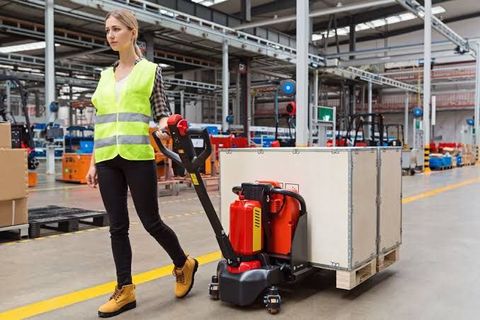
Material handling equipment is used to move, store, protect, and organize goods and materials throughout warehouses, distribution facilities, manufacturing plants, and industrial environments.
The equipment can range from basic carts and pallet equipment to powered vehicles, conveyors, automated storage systems, and warehouse-management technologies.
An effective material handling system connects equipment, storage areas, workflows, employees, and facility layouts. The objective is to move materials through the facility in an organized and predictable manner while supporting safety and operational efficiency.
Why Material Handling Systems Matter
Material movement can represent a significant part of warehouse and manufacturing operations. Poorly planned movement routes may create congestion, unnecessary handling, storage challenges, or increased workplace risks.
Material handling planning commonly considers:
Material volume and weight
Product dimensions
Storage requirements
Travel distances
Facility layout
Loading and unloading areas
Equipment capacity
Workflow patterns
Operator requirements
Safety considerations
Future operational changes
The right system depends on the characteristics of the facility and the materials being handled.
Common Material Handling Equipment
Facilities use different equipment according to their operational requirements.
| Equipment | Primary Function | Common Application |
|---|---|---|
| Pallet Jack | Moving palletized loads | Warehouses and storage areas |
| Forklift | Lifting and transporting materials | Industrial facilities |
| Conveyor | Continuous material movement | Distribution and production |
| Reach Truck | High-level pallet handling | Warehouse storage |
| Stacker | Lifting and positioning pallets | Smaller storage areas |
| Automated Guided Vehicle | Automated material movement | Industrial facilities |
| Crane System | Heavy-load lifting | Manufacturing and warehouses |
| Storage Rack | Organized vertical storage | Distribution facilities |
| Cart or Trolley | Short-distance movement | Warehouses and production areas |
Equipment selection should reflect load characteristics, aisle dimensions, travel distances, lifting heights, floor conditions, and operating patterns.
Warehouse Storage Systems
Storage equipment determines how effectively available warehouse space can be organized.
Common systems include:
Selective Pallet Racking
Selective racks provide direct access to individual pallet positions and are widely used where different products need frequent access.
Drive-In Racking
Drive-in configurations allow equipment to enter storage lanes and can support high-density storage for suitable product profiles.
Cantilever Racking
Cantilever systems are designed for long or irregular materials such as pipes, lumber, panels, and other extended loads.
Mezzanine Systems
Mezzanines can create additional usable levels within suitable facilities, subject to structural and regulatory considerations.
Automated Storage and Retrieval Systems
AS/RS technology combines storage structures, automated equipment, controls, and software to move inventory within defined storage locations.
Conveyor Systems
Conveyors provide controlled movement of materials between different areas.
Common conveyor types include:
Belt conveyors
Roller conveyors
Chain conveyors
Slat conveyors
Screw conveyors
Flexible conveyors
Overhead conveyors
Conveyor selection depends on material characteristics, throughput, speed, elevation changes, layout, and environmental conditions.
Modern conveyor systems can also incorporate sensors, scanners, automated sorting, and control software.
Forklifts and Powered Equipment
Forklifts are commonly used for lifting and transporting palletized materials.
Different configurations are designed for different operating environments, including:
Counterbalance forklifts
Reach trucks
Order pickers
Narrow-aisle equipment
Rough-terrain forklifts
Electric forklifts
Internal-combustion forklifts
Selection considerations can include rated capacity, lifting height, turning radius, aisle width, fuel or battery technology, operating environment, and attachment requirements.
Operators should follow applicable training, inspection, and workplace-safety requirements.
Automated Material Handling
Automation is increasingly being incorporated into warehouse and manufacturing environments.
Automated systems may include:
Automated guided vehicles
Autonomous mobile robots
Automated storage and retrieval
Robotic palletizing
Automated sorting
Conveyor controls
Barcode and RFID systems
Warehouse-management software
Automated mobile robots can transport materials between designated areas while interacting with facility-management systems.
Automation planning should consider traffic patterns, charging infrastructure, safety zones, integration requirements, and exception handling.
Warehouse Layout Planning
Facility layout has a direct influence on material movement.
A typical planning process may examine:
Receiving → Inspection → Storage → Picking → Packing → Staging → Shipping
The exact arrangement varies according to facility type and workflow.
Important layout factors include:
Aisle width
Storage height
Travel distance
Dock locations
Pedestrian routes
Equipment turning areas
Emergency access
Charging areas
Maintenance areas
Fire-protection requirements
Shorter and more predictable movement paths can help reduce unnecessary material travel.
Equipment Selection
Equipment selection should begin with operational requirements rather than a particular equipment type.
Important questions include:
What materials are being moved?
What is the maximum load?
How frequently does movement occur?
How high must materials be lifted?
What distances are involved?
What aisle width is available?
Are materials fragile, hazardous, or temperature-sensitive?
Is automation appropriate?
What maintenance infrastructure is required?
A facility may need multiple types of equipment rather than one universal solution.
Material Handling Safety
Material handling involves risks related to lifting, vehicle movement, falling objects, collisions, ergonomic strain, and equipment operation.
Safety planning can include:
Equipment inspections
Operator training
Pedestrian separation
Clearly marked travel routes
Load-capacity awareness
Rack inspections
Safe stacking procedures
Battery-charging controls
Emergency procedures
Preventive maintenance
In the United States, OSHA requirements address powered industrial trucks and other workplace hazards relevant to material-handling operations.
Facilities should also evaluate site-specific risks rather than relying only on general equipment procedures.
Warehouse Management Technology
Material handling equipment increasingly works alongside warehouse-management and inventory-control systems.
Technology can track:
Inventory locations
Material movement
Equipment activity
Order status
Storage utilization
Picking activity
Receiving and shipping workflows
Barcode scanners, RFID technology, sensors, warehouse-management software, and equipment telemetry can provide operational data.
Connecting equipment with warehouse-management systems can also support more coordinated material movement.
Maintenance Planning
Preventive maintenance is important for both powered and mechanical material handling equipment.
A maintenance program may include:
Forklift inspections
Battery checks
Tire inspections
Hydraulic-system checks
Conveyor inspections
Chain and belt inspection
Rack condition checks
Motor inspection
Sensor testing
Safety-device testing
Facilities should maintain inspection and maintenance records according to equipment requirements and applicable regulations.
Unexpected equipment downtime can affect material flow, so critical equipment may require additional monitoring or redundancy.
Recent Material Handling Developments
Warehouse technology continues to evolve around automation, data visibility, and operational flexibility.
Recent developments include:
Autonomous mobile robots
AI-assisted warehouse planning
Automated storage systems
Robotic picking
Computer vision
Smart conveyor controls
Real-time equipment monitoring
Digital warehouse management
Battery-electric equipment
These technologies can help facilities manage complex workflows, but implementation requires consideration of facility layout, infrastructure, workforce interaction, software integration, and safety.
Laws, Standards, and Compliance
Material handling operations may be subject to workplace-safety, electrical, fire, building, and equipment requirements.
In the United States, OSHA requirements cover areas such as powered industrial trucks, walking-working surfaces, materials handling, and workplace safety.
Facilities may also consider standards and guidance involving:
Forklift operation
Storage racks
Machine guarding
Conveyor safety
Electrical systems
Fire protection
Emergency access
Battery charging
Warehouse automation
Requirements vary according to equipment, facility type, industry, and jurisdiction. Current federal, state, and local requirements should be reviewed before implementing significant changes.
Tools and Resources
Several tools can support warehouse and material handling planning.
Useful resources include:
Warehouse layout software
Storage-capacity calculators
Pallet-racking planning tools
Forklift capacity specifications
Conveyor sizing information
Warehouse-management systems
Barcode and RFID systems
Equipment inspection checklists
Fleet monitoring platforms
Maintenance management software
Facility drawings and accurate inventory-flow data can help identify bottlenecks and determine where equipment changes may have the greatest operational impact.
FAQs
What is material handling equipment?
Material handling equipment includes machines and systems used to move, store, organize, protect, and control materials within warehouses, manufacturing facilities, distribution centers, and other industrial environments.
What equipment is commonly used in warehouses?
Common equipment includes forklifts, pallet jacks, conveyors, reach trucks, stackers, storage racks, carts, automated mobile robots, and automated storage systems.
How is warehouse equipment selected?
Selection depends on load characteristics, travel distance, lifting height, aisle dimensions, operating frequency, facility layout, safety requirements, and automation needs.
What is automated material handling?
Automated material handling uses technologies such as robots, conveyors, automated storage systems, sensors, and software to move or organize materials with reduced manual intervention.
Why is warehouse layout important?
Layout affects travel distance, congestion, storage capacity, pedestrian movement, equipment access, and overall workflow. A well-planned layout can support more predictable material movement.
Conclusion
Material handling equipment forms an important part of modern warehouse and industrial operations. Effective planning requires consideration of storage, movement, equipment capacity, facility layout, workforce interaction, safety, maintenance, and technology.
The best approach is usually based on the complete workflow rather than selecting equipment in isolation. Facilities can evaluate current material flows, identify operational constraints, and then determine which combination of mechanical, automated, and digital systems is appropriate.
As warehouses adopt more automation and connected technologies, material handling is increasingly becoming an integrated part of warehouse-management and facility-planning strategies.

Related Post...
Material Handling Equipment Guide: Warehouse Systems, Equipment, and Operations Planning
Updated: September 09, 2026
Read More
Industrial Boiler Guide: Boiler Systems, Energy Management, and Maintenance Planning
Updated: September 09, 2026
Read More
Elevator Systems Guide: Vertical Transportation, Equipment Technology, and Building Safety
Updated: September 01, 2026
Read More