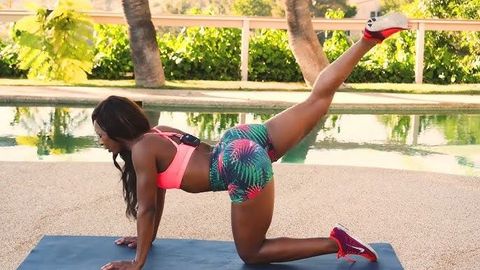
Hamstring Workout Guide: Leg Strength, Hip Stability, and Exercise Form
The hamstrings are a group of muscles located at the back of the thigh. They contribute to hip extension and knee flexion and play an important role in walking, running, jumping, and other lower-body movements.
A balanced hamstring routine can combine strengthening exercises, controlled movement, hip stability, and appropriate mobility work. Good technique is particularly important when exercises involve a hip-hinge movement.
Understanding Hamstring Training
Hamstring exercises generally involve one or both major functions of the muscle group: bending the knee and extending the hip.
Common exercises include:
Romanian deadlifts
Leg curls
Glute bridges
Hip hinges
Single-leg deadlifts
Stability-ball leg curls
Different movements emphasize the hamstrings in different ways.
Common Hamstring Exercises
| Exercise | Primary Focus |
| Romanian Deadlift | Hip hinge and posterior-chain strength |
| Leg Curl | Knee-flexion strength |
| Glute Bridge | Hip extension |
| Single-Leg Deadlift | Hamstrings, balance, and hip stability |
| Stability-Ball Curl | Hamstrings and lower-body control |
| Hip Hinge | Movement technique and posterior-chain engagement |
Proper Exercise Form
For hamstring-focused exercises, controlled positioning is more important than using excessive resistance.
During a hip-hinge movement:
Stand with a comfortable foot position.
Keep your torso controlled.
Move the hips backward while maintaining a stable spine.
Keep the knees slightly bent.
Lower only as far as you can maintain good positioning.
Drive the hips forward to return to the starting position.
The appropriate range of motion varies according to mobility, strength, and individual anatomy.
Technique Tips
Move slowly and deliberately.
Keep resistance manageable.
Avoid rounding or excessively arching the back.
Do not force a deeper stretch.
Keep the movement controlled throughout.
Increase resistance gradually.
Hamstrings and Hip Stability
The hamstrings work alongside the glutes and other muscles around the hips and pelvis during many lower-body movements.
A balanced routine can therefore include:
Hamstring exercises
Glute exercises
Single-leg movements
Core exercises
Hip mobility drills
Lower-body strength exercises
Training several movement patterns can support balanced lower-body development.
Building a Simple Hamstring Workout
A basic routine could include:
Romanian deadlifts
Leg curls
Glute bridges
Reverse lunges
Calf raises
Beginners can start with bodyweight or light resistance and focus on learning the movement before progressing.
Progression Options
Training difficulty can gradually increase through:
Additional repetitions
Additional sets
Increased resistance
Slower lowering phases
Single-leg variations
Improved movement control
Avoid increasing several training variables at the same time.
Mobility and Recovery
Hamstring strength and mobility are related but distinct qualities. Being flexible does not automatically mean having strong hamstrings, and strength training does not require forcing extreme flexibility.
Gentle mobility exercises can be included as part of a broader routine.
Recovery also matters. Allow sufficient rest after demanding lower-body workouts and avoid suddenly increasing training volume.
Common Training Mistakes
Some common problems include:
Using excessive weight
Rounding the back during hip hinges
Forcing the range of motion
Moving too quickly
Treating discomfort as something to ignore
Increasing resistance too rapidly
Training the hamstrings heavily without adequate recovery
Reducing resistance can make it easier to maintain consistent technique.
Frequently Asked Questions
What exercises work the hamstrings?
Romanian deadlifts, leg curls, hip hinges, single-leg deadlifts, and stability-ball curls can all train the hamstrings through different movement patterns.
Are hamstring exercises important for leg strength?
Yes. The hamstrings contribute to hip and knee movement and are an important part of balanced lower-body strength training.
Can beginners train their hamstrings?
Yes. Beginners can start with simple movements and manageable resistance while focusing on controlled technique and appropriate range of motion.
Do hamstrings need stretching?
Mobility work can be useful depending on individual needs, but hamstring strength and flexibility are separate qualities. Stretching should be comfortable rather than forced.
How often should hamstrings be trained?
Training frequency depends on exercise intensity, overall weekly training volume, recovery, and individual goals. Adequate recovery should be allowed between demanding sessions.
Conclusion
A balanced hamstring workout can support leg strength, hip stability, movement control, and lower-body conditioning. Exercises such as Romanian deadlifts, leg curls, glute bridges, and single-leg movements train the hamstrings through different functions.
Focus on controlled technique, an appropriate range of motion, gradual progression, and adequate recovery rather than simply increasing resistance. Consistency is an important part of sustainable strength training.
Disclaimer
This article is provided for general educational and informational purposes only and is not individualized medical or fitness advice. Exercise suitability varies between individuals. Anyone with an injury, medical condition, persistent pain, or physical limitation should consider consulting an appropriately qualified healthcare or fitness professional before beginning a new exercise routine. Stop exercising if you experience sharp, severe, or unusual pain.

Related Post...

Women’s Lower Body Training Guide: Glutes, Legs, Hips, and Exercise Technique
Updated: August 17, 2026
Read More
Women’s Strength Training Guide: Lower Body Exercises, Core Stability, and Upper Body Strength
Updated: August 17, 2026
Read More
Dumbbell Exercises for Women: Full-Body Strength, Muscle Activation, and Proper Technique
Updated: August 17, 2026
Read More