Employee Onboarding Guide: HR Workflows, Compliance Records, and Workforce Management
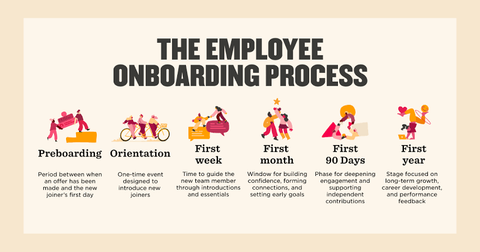
Employee onboarding is the structured process of bringing a new employee into an organization and preparing them to perform their role. It can begin after an employment decision and continue through documentation, payroll setup, training, technology access, orientation, and early performance management.
A well-organized onboarding process helps HR teams maintain consistent records while giving new employees clear information about workplace policies, responsibilities, systems, and expectations.
For employers, onboarding is also an important administrative and compliance process because certain employment records and forms must be completed and maintained appropriately.
What Employee Onboarding Includes
A comprehensive onboarding workflow can include:
Employee information collection
Employment documentation
Tax and payroll setup
Eligibility verification
Benefits enrollment
Policy acknowledgment
Technology access
Equipment assignment
Orientation
Role-specific training
Workplace safety information
Manager introductions
Performance expectations
Early check-ins
The exact process varies according to the employer, industry, workforce structure, employee classification, location, and applicable requirements.
Building an HR Onboarding Workflow
A consistent workflow can reduce administrative gaps and make responsibilities clearer.
A typical process may include:
Create the employee record.
Provide required employment documentation.
Collect appropriate tax and payroll information.
Complete required work-authorization procedures.
Establish payroll and benefits information.
Assign systems and equipment.
Provide company policies and required training.
Introduce the employee to the team.
Establish role expectations.
Conduct follow-up reviews during the initial employment period.
HR, payroll, information technology, security, managers, and other departments may each have separate responsibilities.
A centralized onboarding checklist can help coordinate these activities.
Employment Records and Documentation
Employee onboarding generates records that may need to be maintained securely.
Depending on the organization and employee, records can include:
Employment agreements
Tax forms
Work-authorization documentation
Benefits records
Policy acknowledgments
Training records
Emergency-contact information
Equipment records
Payroll information
Performance documentation
Employers should distinguish between information that must be collected, information that may be optional, and information that should not be requested unless there is an appropriate business or legal reason.
Access to employee records should also be restricted according to role and legitimate business need.
Form I-9 and Employment Eligibility
For U.S. employers, Form I-9 is an important part of employment eligibility procedures.
U.S. Citizenship and Immigration Services states that employers must complete and retain Form I-9 for individuals hired for employment in the United States, subject to applicable requirements.
Employers should use the current USCIS instructions and forms rather than relying on outdated onboarding templates.
Certain employers may also participate in E-Verify, which provides an electronic process for confirming employment eligibility using information from Form I-9.
Because work-authorization requirements can change, HR teams should regularly verify current USCIS and Department of Homeland Security guidance.
Payroll and Tax Setup
Payroll onboarding generally requires accurate employee information before compensation can be processed.
Depending on the employee and organization, onboarding may involve:
Form W-4
State withholding information
Direct-deposit details
Payroll classification
Compensation information
Benefit deductions
Retirement-plan elections
Timekeeping setup
The IRS provides employer guidance concerning employment taxes, withholding, reporting, and recordkeeping.
Payroll procedures should be coordinated with HR and accounting so that employee records remain consistent across systems.
Benefits and Workplace Policies
Onboarding may introduce employees to benefit programs and workplace policies.
Examples include:
Health-plan information
Retirement plans
Leave policies
Workplace conduct
Information-security policies
Confidentiality requirements
Remote-work policies
Attendance expectations
Safety procedures
Equipment policies
Employees should have a clear method for accessing current policy documents after onboarding rather than receiving information only during their first days.
Technology and Access Management
Modern onboarding often requires coordination with information technology and security teams.
Technology onboarding may include:
Email accounts
HR platforms
Payroll systems
Collaboration tools
Customer-management systems
Internal applications
Security credentials
Multi-factor authentication
Equipment assignment
Access should be based on the employee's role and responsibilities.
Organizations should avoid giving new employees unnecessary access to sensitive systems and should document account provisioning.
The same access-management process should also support employee departures and role changes.
Training and Early Workforce Management
Onboarding should extend beyond paperwork.
Role-specific training can help employees understand:
Responsibilities
Business processes
Performance expectations
Communication procedures
Technology
Security practices
Customer or internal workflows
Escalation procedures
Managers can schedule structured check-ins during the first several weeks or months.
These conversations can identify training gaps, clarify expectations, and help managers determine whether the employee has the resources needed to perform effectively.
Employee Data Privacy
Onboarding involves collecting personal information, so privacy and security should be considered from the beginning.
Information may include:
Personal contact information
Tax information
Identification documents
Banking information
Benefits information
Emergency contacts
Background-screening information
Health-related information in certain circumstances
Organizations should establish controls for collection, access, storage, retention, and deletion.
Employers operating in multiple states should also evaluate applicable state privacy requirements and determine which employee-data protections apply to their workforce.
Compliance and Record Retention
Recordkeeping requirements can differ depending on the type of document and applicable federal, state, and local requirements.
HR teams should maintain a documented retention framework that identifies:
What records are maintained
Where records are stored
Who can access them
How long records are retained
When records are securely destroyed
Which records require restricted access
Employers should avoid applying one universal retention period to every employee record because different laws and documents can have different requirements.
Recent Developments
Employee onboarding continues to change as organizations adopt digital HR platforms, remote-work systems, electronic forms, automated workflows, and identity-management technology.
Current areas of focus include:
Digital employee records
Automated onboarding workflows
Electronic document management
Identity and access management
HR information-system integration
Remote onboarding
Automated compliance reminders
Employee self-service portals
Workforce analytics
Stronger employee-data security
Organizations should review automated onboarding workflows periodically to ensure that technology does not create inaccurate records or bypass required human review.
Tools and Resources
Useful U.S. resources for employee onboarding include:
U.S. Citizenship and Immigration Services — Form I-9 and employment eligibility information
Internal Revenue Service — employer tax and payroll guidance
U.S. Department of Labor — federal employment requirements
Department of Homeland Security — E-Verify information
HR information systems
Payroll platforms
Document-management systems
Identity and access-management tools
Employee self-service portals
Internal onboarding checklists
FAQs
1. What is employee onboarding?
Employee onboarding is the structured process of introducing a new employee to an organization while completing required documentation, payroll setup, training, technology access, policies, and role preparation.
2. What documents are commonly collected during onboarding?
Depending on the employee and organization, onboarding may involve tax forms, work-authorization documentation, employment records, benefits information, policy acknowledgments, payroll information, and emergency-contact details.
3. Why is Form I-9 important?
Form I-9 is used by U.S. employers to verify the identity and employment authorization of individuals hired for employment in the United States, subject to applicable requirements.
4. How can technology improve onboarding?
HR technology can centralize employee records, automate workflow steps, coordinate approvals, manage documents, track training, provision access, and provide employees with self-service capabilities.
5. How long should employee records be retained?
There is no single retention period for every employee record. Requirements can differ by document type and applicable federal, state, or local rules. Employers should maintain a documented retention schedule based on the records they hold.
Conclusion
Employee onboarding connects HR administration, compliance documentation, payroll, benefits, technology access, training, and workforce management.
A strong onboarding program uses clear workflows, secure employee records, appropriate access controls, current government forms, structured training, and ongoing manager follow-up. Organizations should also review onboarding procedures periodically to account for changes in employment requirements, technology, privacy obligations, and workforce practices.

Related Post...
Call Center Management Guide: Customer Support Systems, Staffing, and Operations Planning
Updated: September 15, 2026
Read More
Business Process Outsourcing Guide: Operations, Vendor Selection, and Management Planning
Updated: September 15, 2026
Read More
Virtual Reception Guide: Business Communications, Call Handling, and Office Operations
Updated: September 15, 2026
Read More